
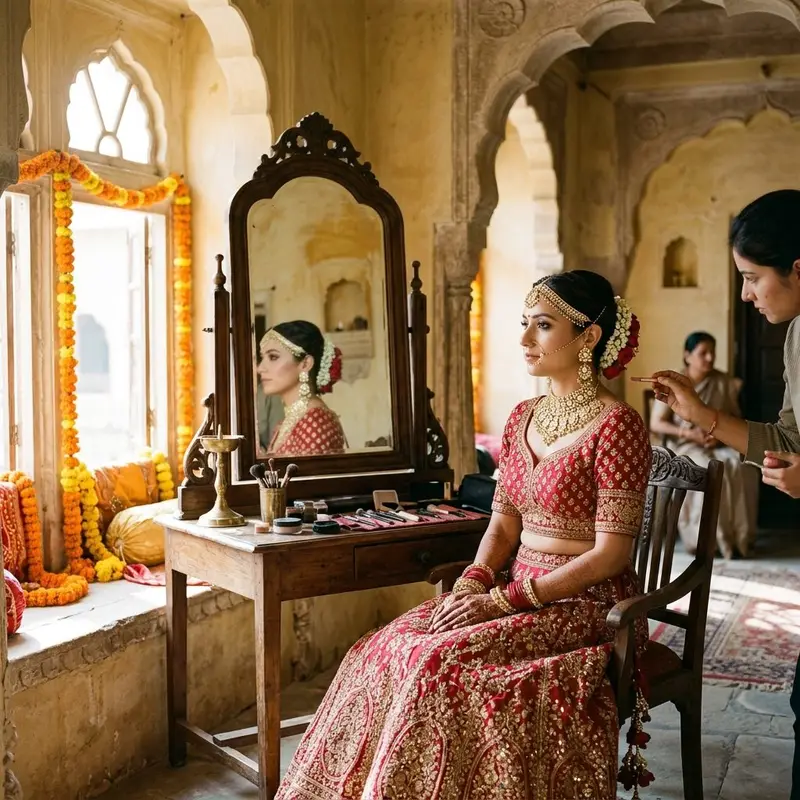
When a bridal makeup artist lists "100% Waterproof HD Bridal Package" on their quote, it sounds reassuring. Yet, bridal beauty teams routinely witness a common calamity: eye makeup smudging during the Kanyadaan or foundation separating around the nose long before the Vidaai. The reality is that true waterproofing is an intricate science of cosmetic chemistry, skin prep, and physical barrier layering—not simply a generous spritz of aerosol setting spray at the end of a session.
An Indian wedding puts makeup through harsher conditions than almost any other event in the world. Between intense Hawan smoke, humidity under mandap lights, ceremonial oils, friction from heavy dupattas and mathapattis, and emotional tears, your face requires more than standard long-wear cosmetics. Testing your artist's waterproof credentials before paying your final retainer is essential.
The Studio Trap: Why Most Trials Give False Confidence
The biggest oversight brides make during a paid trial is evaluating their look solely in front of a calibrated vanity ring light and wiping it off thirty minutes later. Studio lighting flatters fresh pigments; it does not measure wear resistance. When scheduling your trial, book it early in the day so you can wear the makeup for a minimum of six to eight hours in real-world conditions.
Water-resistant makeup repels tears and perspiration, but ceremonial ghee, oil, and sebum break it down instantly. A skilled artist plans for oil resistance as rigorously as waterproofing.
The Essential Tests to Conduct During Your Trial
To ensure your bridal artist understands how to formulate a truly budge-proof base, observe their techniques and carry out these three specific checks:
- The Inner Tear Duct and Lash Line Check: Ask your artist how they prep watery eyes. After they finish the eye look, place a couple of saline eye drops near the inner corner. True waterproof kajal and latex-free, polymer lash adhesives will not bleed, sting, or form gummy grey beads along the lower lash line.
- The Ritual Oil and Friction Barrier: Traditional rituals like Sindoor Daan and applying chandan or haldi tilak introduce friction and natural oils to the hairline and forehead. Inquire whether your artist uses silicone-based sealers or alcohol-activated palettes that lock the forehead base against friction from heavy mathapattis and bridal dupattas.
- The Blot-Versus-Wipe Test: Three hours into your trial, press a clean white tissue firmly against your chin and smile lines. If the base lifts in patches rather than leaving a faint, even imprint, the artist has layered heavy water-based and silicone-based products incorrectly, causing them to separate.
Contract Clarity: Touch-Ups and Mandap Presence
Waterproofing is only as good as your mid-ritual maintenance. When drafting your vendor contract, clarify whether your artist or a senior assistant will remain present through the Pheras and Vidaai for controlled touch-ups. If your budget accounts only for get-ready services, ensure your artist provides an emergency touch-up kit containing medical-grade blotting sheets, a mini powder puff loaded with translucent fixing powder, and disposable precision swabs to gently dab tears without smearing the under-eye concealer.
Finding an experienced beauty professional who respects the physical realities of sacred Vedic rituals makes all the difference on your big day. To discover, compare, and book verified bridal artists across India, explore Shubh Bazaar to secure trusted talent for your wedding celebrations.