
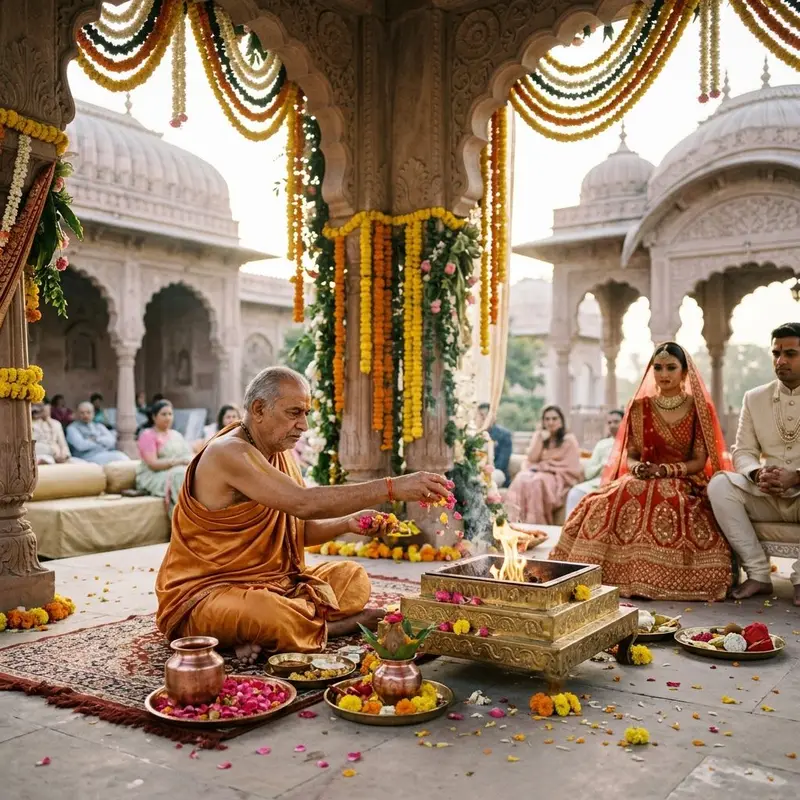
Planning a destination wedding at a palace in Rajasthan or a coastal resort in Goa brings unforgettable romance, but it also introduces a delicate ritual challenge. Indian wedding ceremonies are deeply grounded in community-specific rites, from the dawn Muhurtham of a Tamil Brahmin Kalyanam to the twilight Lagnavidhi of a Gujarati celebration. When the marriage venue shifts hundreds of miles away from your ancestral town, booking a priest who understands your specific sampradaya (Vedic lineage) while expertly navigating resort hospitality guidelines becomes paramount.
Matching Regional Sampradaya and Ceremony Timings
Families often assume that any local priest stationed near the destination venue can conduct their rituals. However, Vedic practices vary sharply across sub-sects and geographies. A Telugu, Konkani, or Marwari ceremony involves distinct mantras, exact sequence timings, and specific ancestral oaths. While North Indian traditions culminate in the Sindoor Daan and Saat Phere around dusk, South Indian traditions require the Mangalsutra Dharana to occur at a calculated astrological minute at dawn.
When interviewing a priest for an out-of-station wedding, verify whether their recitation style and linguistic fluency align with both families. An experienced destination pandit does more than chant; they translate the philosophical significance of every rite to guests, gracefully bridging generational and regional divides.
Navigating Resort Fire Codes and Havan Setup
One of the most persistent operational disputes at luxury heritage properties involves the sacred fire (Agni). Historic palaces and five-star ballrooms feature antique woodwork, imported drapery, and hyper-sensitive optical smoke detectors. A priest unaccustomed to hotel safety standards might light a heavy wood fire using damp logs, triggering emergency sprinkler systems or violating venue preservation rules.
Specialized destination wedding priests know how to preserve sacred authenticity without alarming hotel management. They use dry samidha (prescribed ritual twigs like khair or palash), pure clarified butter, and organic camphor that generate minimal, sweet-smelling smoke rather than thick soot. Furthermore, they work alongside the banqueting department to ensure the mandap is properly positioned, orienting the havan toward the auspicious Ishanya (northeast) direction while respecting ventilation drafts.
Logistics: Perishable Samagri and Timelines
A destination ceremony demands meticulous ritual logistics. Weddings require an extensive inventory of perishable and sacred dry materials:
- Perishable offerings: Fresh mango leaves, betel leaves, tender coconuts, lotus blossoms, and fresh durva grass.
- Consecrated articles: Specific sacred threads, turmeric roots, brass kalash pots, and community-specific bridal accessories.
- Mandap inspection: Arriving at least 24 hours prior to inspect the platform setup and align schedules with the decor team.
A sacred Vedic vivaha does not depend on the volume of smoke, but on the precise recitation of mantras and the deliberate intention behind every circumambulation of the sacred fire.
Always ask your priest to supply a two-tier checklist well in advance: items they will personally carry (such as copper vessels, conches, or sacred idols) and perishable items the resort banquet staff must arrange locally. When looking for experienced Vedic priests, astrologers, and coordinators who routinely travel for out-of-station events, explore verified profiles on Shubh Bazaar. Securing the right officiant ensures your sacred vows remain culturally pure and completely stress-free.