
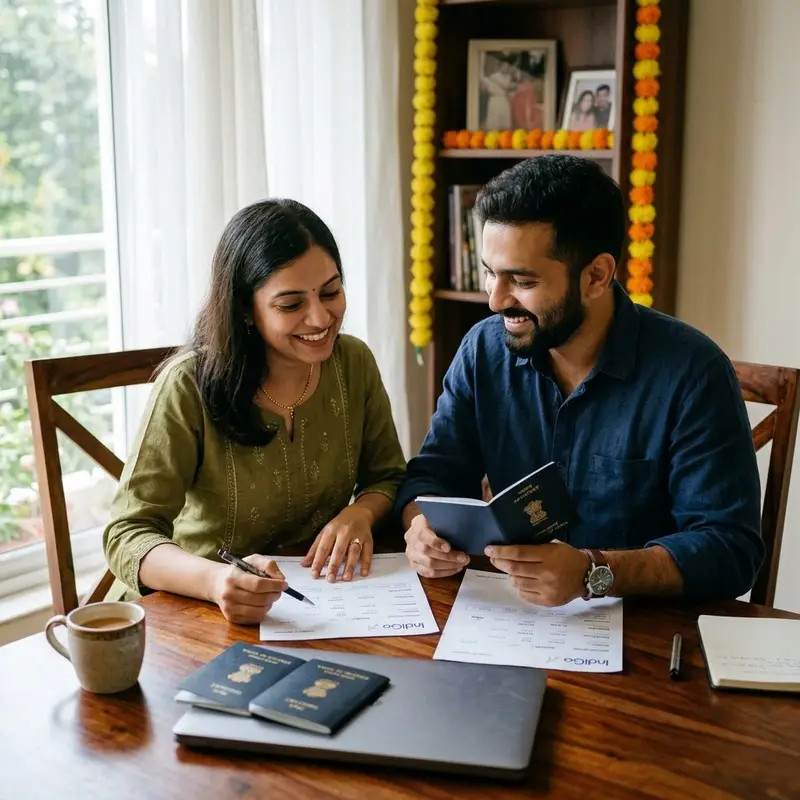
Between finalizing sherwani trials, coordinating sangeet choreographers, and distributing mithai boxes, planning an international honeymoon often gets squeezed into late-night discussions. Many Indian couples dream of boarding a flight to the Amalfi Coast, Interlaken, or Queenstown just forty-eight hours after the vidaai. Yet, an administrative reality often catches couples off guard: your wedding takes place on an auspicious muhurat, but your government marriage certificate under the Hindu Marriage Act or Special Marriage Act takes weeks or even months to arrive.
The Maiden Name and Passport Dilemma
One of the most frequent errors newly engaged couples make is assuming they should apply for honeymoon visas as a legally married unit before the wedding has actually occurred. If the bride intends to change her surname after marriage, doing so before the wedding trip is nearly impossible because passport re-issuance requires a gazette notification or registered marriage certificate.
Specialized honeymoon visa assistance services consistently advise couples to apply under their existing individual passports using their maiden names. Embassies assess applications based on verified legal identity at the time of submission, not future marital status. Attempting to present oneself as married without supporting legal registration can lead to document mismatch flags, biometric delays, or outright visa refusals from strict consular offices.
Peak Saaya Season and Biometric Bottlenecks
In India, wedding dates are clustered around peak saaya months, especially from November through February and late spring. During this exact window, thousands of newlyweds compete for identical consular appointments across VFS and embassy centres in New Delhi, Mumbai, Bengaluru, and other major metros. A Schengen or UK visa appointment slot that normally takes three days to secure can stretch into six weeks during peak winter wedding season.
- Appointment monitoring: Professional visa concierges track slot releases around the clock, locking in biometrics before the wedding rush closes availability.
- Customized cover letters: A tailored cover letter explains the timeline transparently to the visa officer, stating that the trip is a post-nuptial holiday while demonstrating independent eligibility.
- Compliant itineraries: Submitting non-refundable flight bookings before visa approval is risky. Visa experts arrange verifiable, hold-status flight itineraries and refundable hotel vouchers that satisfy embassy rules.
A visa refusal does not merely disrupt a holiday; it clouds the first days of married life with administrative stress that could have been prevented with early professional guidance.
Handling Financial Sponsorship Without Joint Accounts
Another common hurdle is financial documentation. Couples often ask whether one partner can sponsor the other before they are legally wed. Foreign consulates scrutinize informal financial guarantees between individuals who are not yet legally related. Unless there is a registered marriage certificate, consular officers view applicants as two distinct solo travelers traveling together.
A dedicated visa consultant audits each partner's documentation separately, reviewing six months of bank statements, salary slips, and Form 16 filings. If one partner has a non-salaried profile or irregular income, the consultant structures a compliant sponsorship declaration supported by notarized affidavits and parent guarantees where acceptable, eliminating ambiguities that trigger rejection under technical clauses.
Your focus in the final weeks before the mandap should be on celebrating with family, not refreshing embassy booking portals at midnight. To find verified travel planners and visa concierge specialists who understand the unique timelines of Indian weddings, explore Shubh Bazaar to secure expert vendor support for a completely seamless honeymoon departure.