
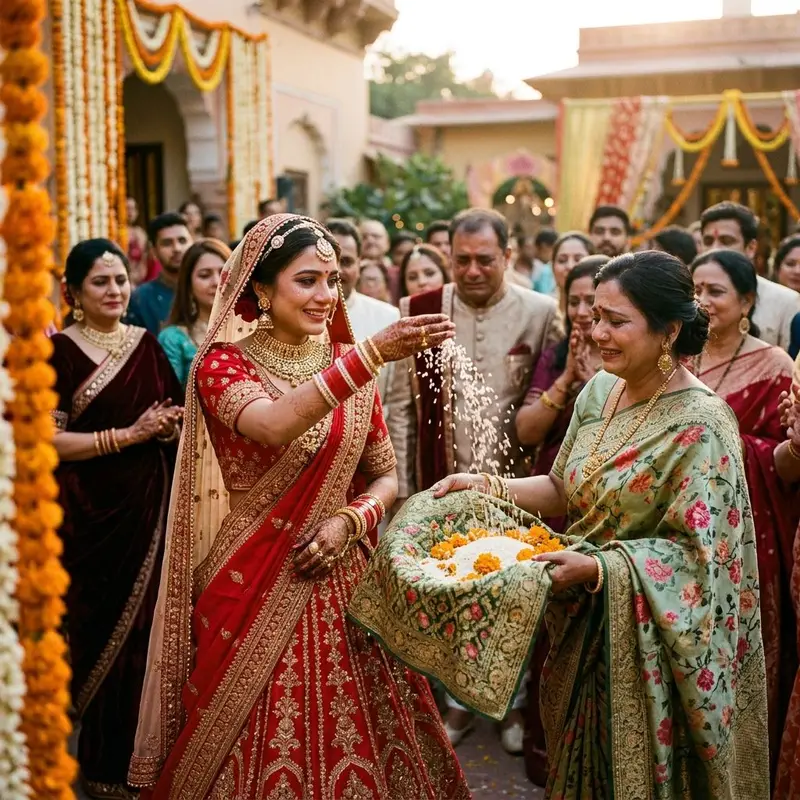
The Indian wedding is a vibrant tapestry of sacred chants, joy, and celebratory music. Yet, no moment carries deeper emotional resonance than the Vidaai (also known as Bidaai, Kanyavidaai, or Doli). Occurring at the conclusion of the wedding rituals, the Vidaai marks the official farewell of the bride from her maternal home as she embarks on her journey with her husband and his family. It is a poignant, bittersweet culmination where joy for the couple's future intertwines with the heartache of parting from childhood roots.
Sacred Symbolism: The Rice Throwing Ritual
Central to the traditional Vidaai is the symbolic ritual of Chawal Fekna (throwing rice). As the bride steps across the threshold of her paternal home or mandap venue, she scoops five handfuls of puffed rice, unpolished grain, or rice mixed with turmeric and coins, tossing it backward over her head into her mother’s outstretched sari pallu or dupatta. Her family stands behind her with open hands to catch the falling grains.
This ancient Vedic custom carries immense spiritual depth. In Hindu tradition, a daughter is venerated as the embodiment of Goddess Lakshmi, the deity of prosperity and auspiciousness. By casting rice back into her parents' home, she symbolically repays her upbringing and prays that her family's household remains blessed with wealth, food, and endless happiness (Annapurna) even after her departure. It reflects her timeless love, assuring her parents that her blessings will always protect their home.
Regional Customs and Cultural Nuances
While the emotional essence remains universal across the subcontinent, Indian communities observe unique traditions during the farewell:
- North India (Doli and Coins): Traditionally carried in a decorated palanquin (doli), the modern bride leaves in a decorated vehicle while family members shower coins behind to ward off evil eyes and wish safe passage.
- Bengal (Kanakanjali): The bride fills her hands with rice and pours it into her mother’s hands, declaring that she has tried to fulfill her debt of love, while her mother reassures her that a daughter's love can never be indebted.
- Gujarat (Kanya Vidaai): The bride rubs her palms with turmeric paste and leaves bright yellow hand impressions on the walls of her paternal house, preserving a physical memory of her presence.
- South India (Kanyadaan Transition): Following the Muhurtham, the couple seeks final blessings from elders by touching their feet, receiving Akshata (sanctified yellow rice) before proceeding toward the groom’s home for the Grihapravesh.
"Vidaai is not a goodbye, but a sacred promise—a bride's heartfelt prayer that abundance forever remains in the home that raised her."
Navigating the Emotional Transition Smoothly
In contemporary celebrations, managing the timing and logistics of the Vidaai requires thoughtful coordination. Traditionally scheduled according to an auspicious Shubh Muhurat, the farewell can often feel rushed or overwhelming amidst lingering guests, luggage transfers, and emotional goodbyes. Planning ahead—such as reserving private space for family members to share quiet moments together before departure—allows everyone to honor the emotional depth of the occasion without feeling hurried.
To keep your wedding timeline on track, coordinate guest transfers, and streamline event schedules effortlessly during emotional milestones, turn to Shubh Muhrat's Guest Manager. Having digital tools handle your event logistics lets your family stay fully present for the moments that matter most.