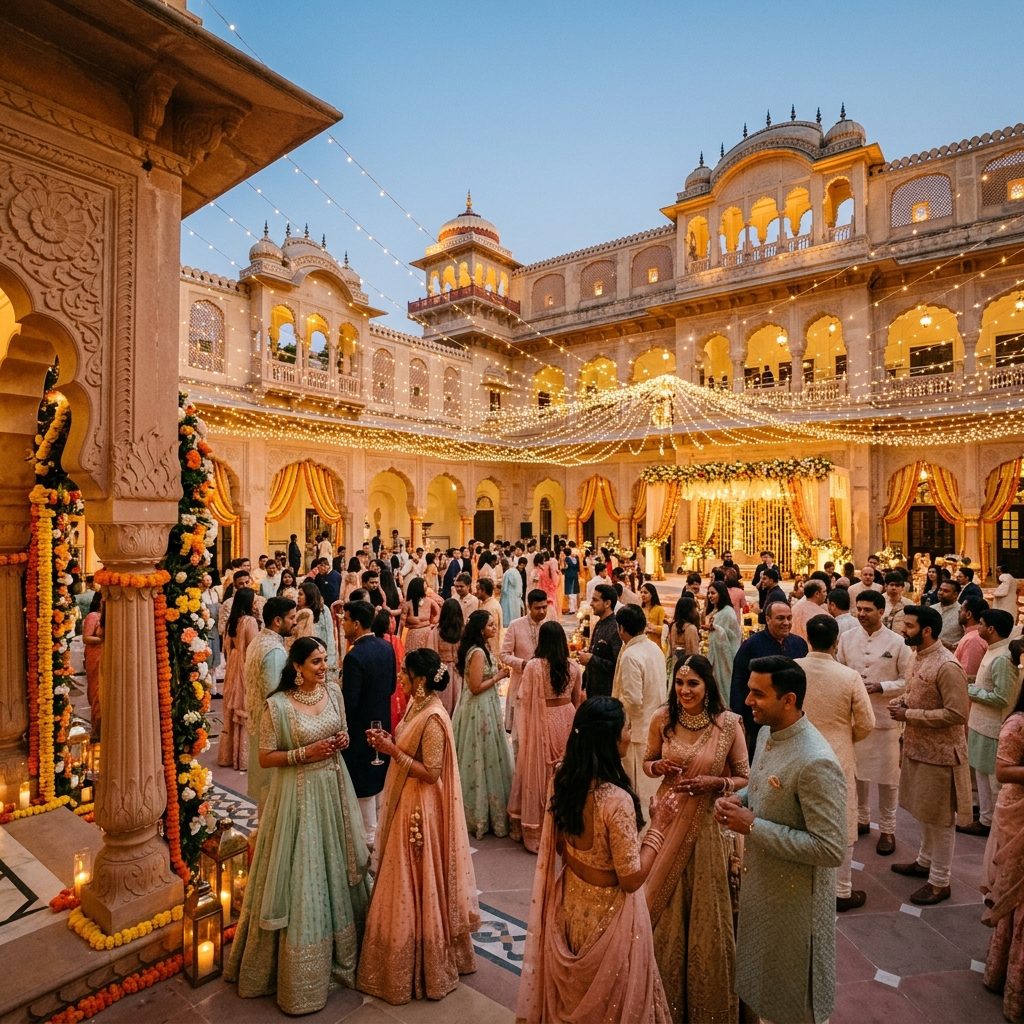
For non-resident Indian couples returning home to tie the knot, planning a destination wedding in India is an emotional homecoming blended with intricate logistical puzzles. Raised or living abroad, NRI couples often find themselves caught between two distinct cultural universes. On one side is the desire for an authentic, deeply spiritual Indian wedding rooted in regional customs and sacred muhurats. On the other side is the familiarity with Western event structures—punctual timelines, cocktail hours that start on the dot, and structured reception programs.
Reconciling these two worlds requires intentional planning, cultural sensitivity, and a realistic understanding of how Indian celebrations unfold. When you bridge Western efficiency with traditional Indian warmth, you create an unforgettable experience for both your local relatives and your international guests.
Understanding the Rhythm of Indian Rituals
In Western wedding planning, every minute of the day is mapped out months in advance. Dinner is served at a precise hour, speeches last exactly ten minutes, and the dance floor opens like clockwork. In contrast, traditional Indian weddings—especially in regions like Punjab, Gujarat, or South India—are dictated by sacred astrological timings known as muhurats, spontaneous family blessings, and the unhurried flow of hospitality.
Trying to force a multi-hour phera ceremony into a tight thirty-minute window borrowed from Western ballroom culture is a recipe for immense anxiety. Instead, successful NRI destination weddings embrace a hybrid scheduling approach. Honor the mandatory auspicious timings for the wedding ceremony, but build buffer zones into your day so guests can transition between rituals without feeling rushed.
Structuring Your Multi-Day Celebration Timeline
To keep elderly family members comfortable while ensuring your international friends remain engaged and energized, structure your wedding week with a thoughtful, rhythmic flow:
- Day One: Welcome dinner and low-key mehendi ceremony, allowing guests flying in from North America or Europe to recover from jet lag and adjust to the local climate.
- Day Two: Haldi and sangeet functions, keeping the atmosphere vibrant with music, regional culinary spreads, and celebratory dances.
- Day Three: Morning or late afternoon pheras according to the chosen muhurat, followed by a mid-day break before the grand evening reception gala.
This pacing ensures that international guests understand the flow of events and local relatives feel respected, while giving everyone enough rest between high-energy celebrations.
Planning an Indian destination wedding from thousands of miles away requires honoring the sacredness of our traditions while engineering effortless comfort for guests traveling across oceans.
Coordinating Vendors and Guest Logistics Across Time Zones
One of the hardest parts of organizing an Indian wedding from abroad is managing communication with local venues, caterers, and decorators across a twelve-hour time difference. Furthermore, tracking RSVPs from guests scattered across the UK, US, UAE, and Australia can quickly become an administrative nightmare if handled through fragmented messaging apps and manual spreadsheets.
To keep your destination wedding running smoothly, centralize your coordination early. Ensure your families on the ground in India are empowered to make final on-site decisions, while you manage the big-picture design and guest communications digitally.
Ready to effortlessly organize your celebration without losing sleep across time zones? Use the Shubh Muhrat Guest Manager to effortlessly track international RSVPs, assign hotel rooms, and manage seating charts for every single wedding function.