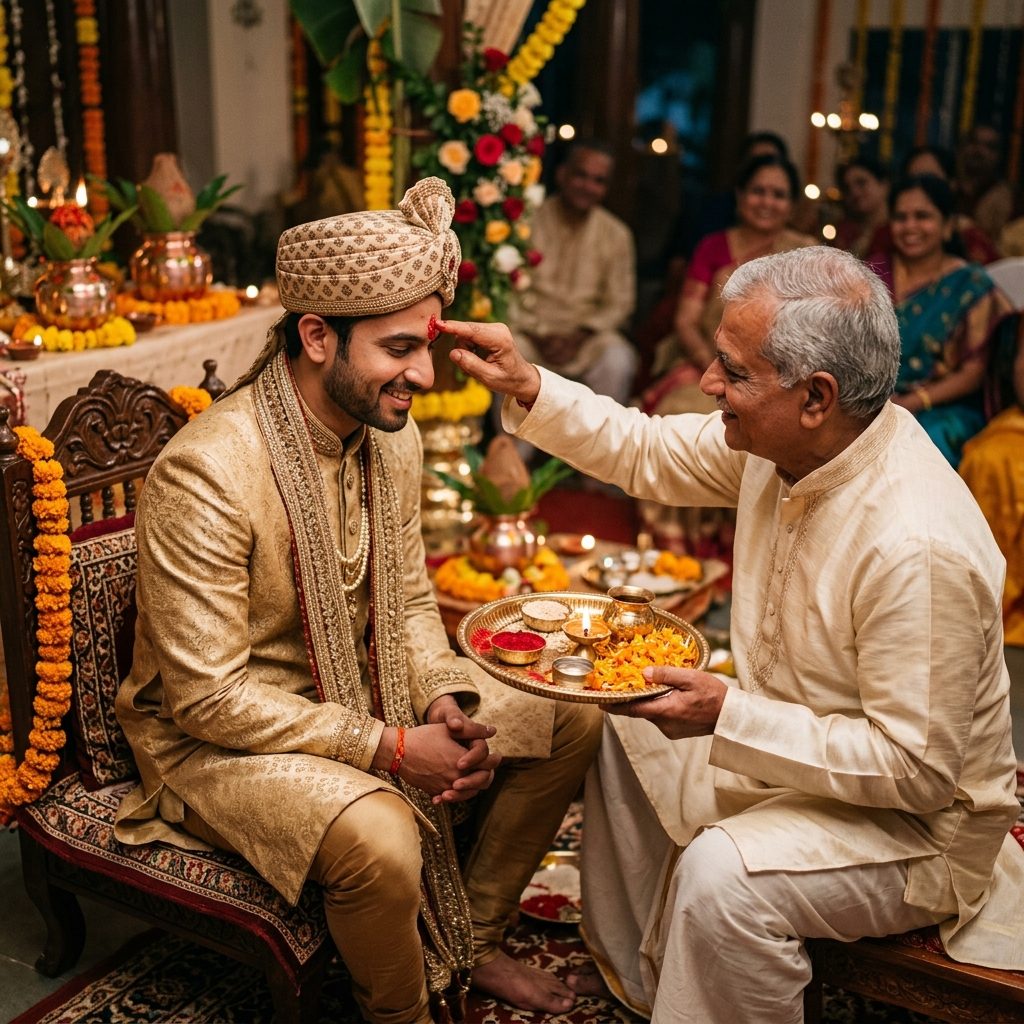
In traditional Indian wedding customs, the Tilak ceremony holds a place of profound spiritual and social importance. Serving as the formal announcement of the wedding alliance, this sacred pre-wedding ritual marks the moment the bride's family officially accepts the groom into their lineage and household. Rooted in ancient Vedic traditions, the auspicious mark of vermilion applied to the groom's forehead symbolizes honor, prosperity, and divine protection as he prepares to enter the sacred householder stage of life known as Grihastha ashram.
Vedic Roots and Sacred Symbolism of the Tilak
The centerpiece of this ritual is the application of the tilak—a sacred paste composed of red vermilion (kumkum) and sandalwood paste, topped with unbroken grains of rice known as akshat. Each element used in the ceremony carries deep cosmic, spiritual, and emotional significance:
- Kumkum (Vermilion): Represents energy, divine enthusiasm, and the protective grace of the Divine Mother to bless the groom with health and longevity.
- Akshat (Unbroken Rice): Symbolizes wholeness, abundance, and fertility, ensuring that the groom’s home remains filled with peace and prosperity.
- Coconut (Shrifal): Presented to the groom as an emblem of ultimate respect, purity, and divine blessings for a happy marital life.
- Auspicious Clothes and Gifts: Handcrafted shawls, sacred garments, and traditional sweets are gifted to solidify the sacred lifelong bond.
Regional Customs and Ritual Expressions Across India
While the underlying ethos remains consistent, the Tilak ceremony is celebrated with vibrant regional nuances across northern and central India. In states like Uttar Pradesh, Bihar, Madhya Pradesh, and Rajasthan, the groom’s future father-in-law, along with brothers and male elders, travels to the groom’s home to conduct the solemn ceremony.
"The application of the sacred tilak is not merely a custom; it is the profound moment when a family opens its heart, bestowing trust and lifelong respect upon the young man who will walk beside their daughter."
During the ritual, the family priest chants ancient Vedic shlokas to invoke Lord Ganesha, requesting the removal of all obstacles. In Punjabi weddings, a parallel ritual occurs during the Roka or Taka, where gifts and blessings formally lock the alliance. In royal Rajasthani households, the ceremony often includes presenting a ceremonial sword, signifying the groom's commitment to protect his bride and household.
Modern Celebrations and Smooth Planning
Today, families often transform the Tilak ceremony from a small home gathering into a magnificent pre-wedding celebration. While maintaining sacred muhurat timings and traditional rituals, contemporary hosts organize elegant gatherings featuring traditional music, curated feast menus, and thoughtful gifting arrangements.
Ensuring that all relatives receive timely details about the auspicious muhurat and venue locations prevents last-minute stress. By blending time-honored traditions with organized modern planning, the Tilak ritual becomes a heartwarming memory for both families involved.
As you prepare for your pre-wedding rituals and invite near and dear ones to share in these precious moments, organizing your guest lists and digital invites is essential. Explore the Shubh Muhrat Invite Studio to craft personalized, culturally rich digital invitations for your Tilak ceremony and sacred wedding functions effortlessly.