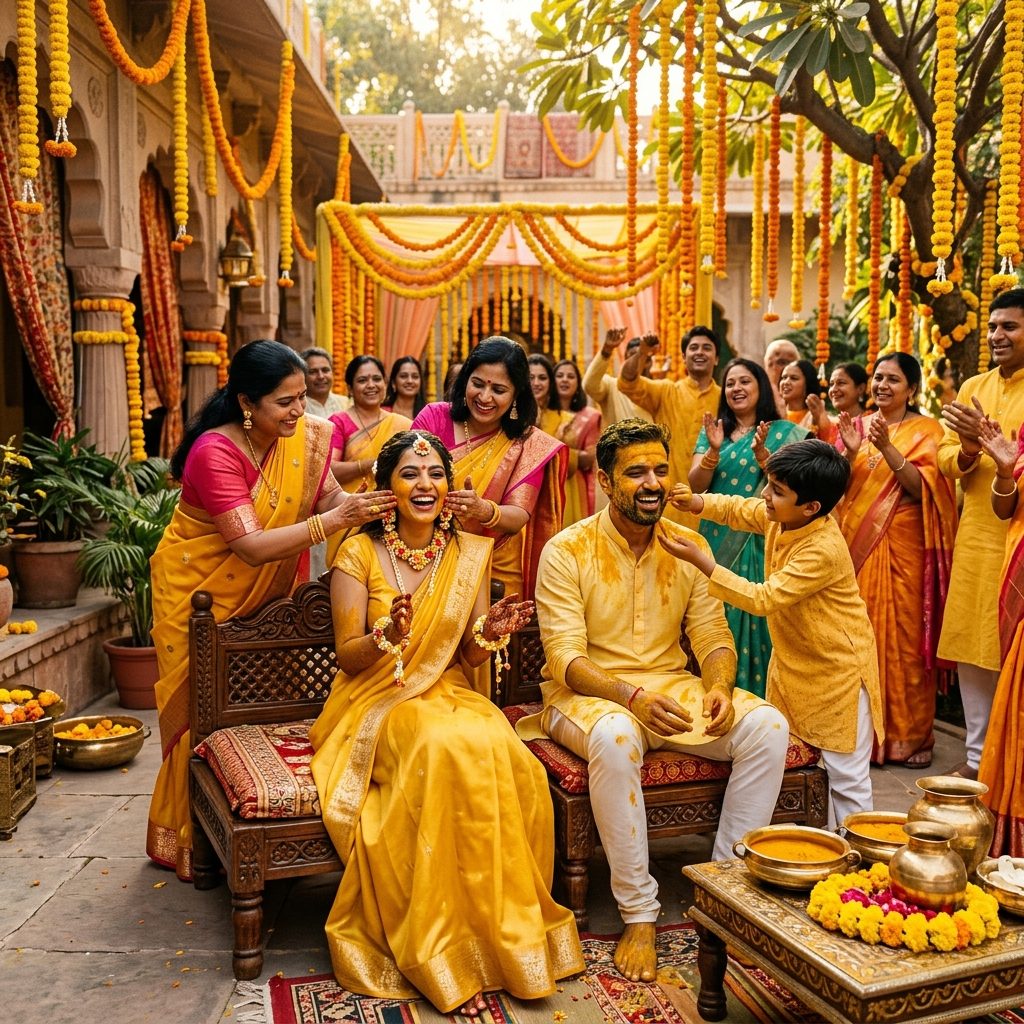
The modern Indian wedding landscape has warmly embraced the joint Haldi ceremony. Bringing the bride and groom together under one festive canopy for the turmeric ritual creates an energetic, joyous atmosphere while saving significant venue costs and vendor time. However, blending two distinct family backgrounds into a single sacred function introduces unique ritual challenges. Every community across India carries specific customs for the turmeric paste application, ranging from North Indian Tel Baan traditions to Marwari Pithi and Maharashtrian Halad Chadavane. Without thoughtful preparation, coordinating these sacred steps across two sets of elders can lead to confusion during the auspicious muhurat.
Respecting Regional Paste Traditions and Ritual Vessels
The most common friction point during a combined Haldi arises from how the sacred paste is prepared and presented. Different families often hold firm beliefs about the ingredients inside the paste—some mandate mustard oil and coarse gram flour, while others use pure sandalwood, turmeric, and rosewater. Rather than forcing a compromise on a sacred mix, the most respectful approach is to maintain two separate brass parats (large traditional bowls) on the main altar. Each family matriarch can prepare their custom paste according to their ancestral recipe before the ceremony begins.
Similarly, the traditional instruments used to apply the paste—such as bundled doob grass, mango leaves, or silver coins—should be kept distinct for each side. By displaying both sets of ritual items side by side on decorated brass trays, you demonstrate respect for both heritage lines while allowing guests to witness the beautiful diversity of Indian wedding traditions.
Structuring Elder Blessings and Simultaneous Timings
Determining who applies the turmeric first can be delicate when both extended families gather in one space. Respecting family hierarchy is central to Indian wedding customs, and neither side should feel overlooked. To maintain harmony, structure the application sequence with simultaneous dual seating.
- Dual Wooden Chowkis: Place two low wooden platforms side by side with adequate space between them. This allows the bride and groom to sit together while their respective aunts and mothers perform the initial sacred applications concurrently.
- Staggered Elder Sequence: Alternate the formal blessings between family sides. For instance, while the bride maternal uncle performs the ritual touch, the groom paternal aunt performs hers on the groom, keeping the energy flowing without delays.
- Unified Celebration: Once the obligatory elder rituals and sacred applications conclude, invite all friends and extended relatives to participate in a combined application phase, culminating in a shared Phoolon Ki Holi flower shower.
A successful joint Haldi is not merely about sharing a stage; it is about honoring two distinct ancestral lineages as they come together in shared joy.
Harmonizing Sacred Mantras and Music Protocols
Music sets the spiritual tone during the initial Tel Baan or Ubtan phase. Different regions have traditional folk songs specific to applying turmeric—such as Punjabi Gidda songs or Rajasthani Manganiyar wedding chants. Coordinate with your folk singers or sound team to allocate dedicated audio sets for each family ritual entry before transitioning into upbeat, popular celebration tracks.
Seamless Event Management for Combined Gatherings
Managing double the headcount at a single venue requires clear communication regarding ritual timelines and seating arrangements. Ensuring elders have designated comfortable seating near the ritual altar prevents fatigue and keeps the ceremony moving within the fixed auspicious muhurat window.
To streamline your planning and guest coordination, leverage smart digital management solutions. The Shubh Muhrat Guest Manager helps couples organize guest lists by family sides, track RSVPs, assign ritual roles, and keep both families perfectly aligned throughout the wedding festivities.