
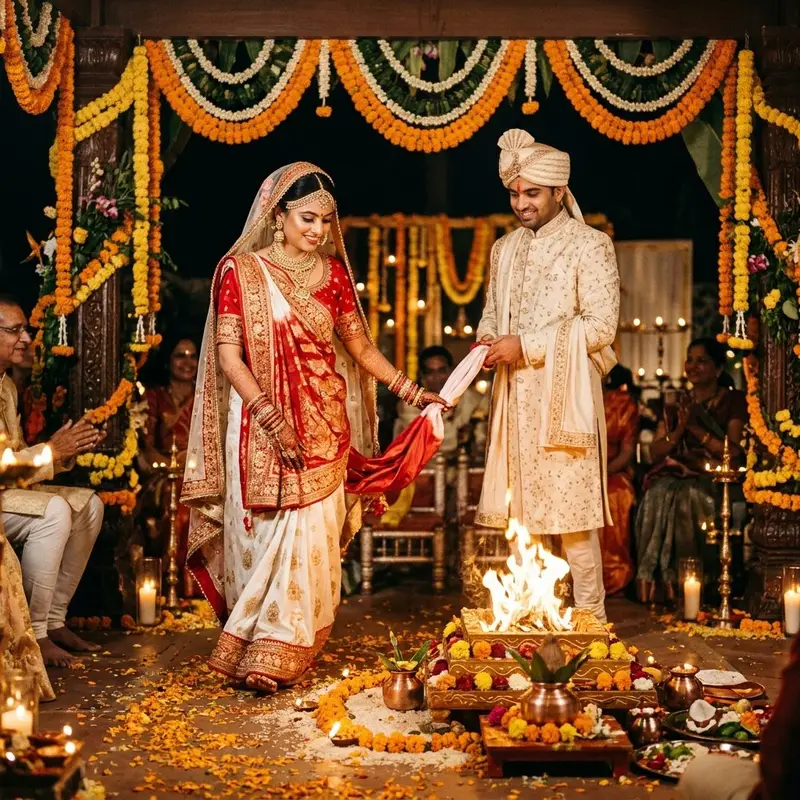
Step into a traditional Gujarati wedding mandap, and you will witness an atmosphere vibrant with color, song, and joyous celebration. Yet, amidst the clinking of red and white chudas and the rhythmic chanting of Vedic mantras, one distinct ritual often surprises first-time guests: the bride and groom complete only four circumambulations around the sacred fire, rather than the seven seen in many other North Indian traditions. Known as the Mangal Pheras, these four rounds are among the most profound and philosophically rich moments of a Gujarati vivah.
The Sacred Four: Aligning with the Purusharthas
The four pheras of a Gujarati wedding are not a shortened shortcut. Instead, they are directly rooted in the Vedic concept of the Purusharthas—the four cardinal pursuits of human life. Each circuit around the agni dedicates the marriage to one of these enduring cornerstones:
- Dharma (Duty and Righteousness): The first round commits the couple to moral integrity, family responsibilities, and upholding societal and spiritual duties together.
- Artha (Prosperity and Stewardship): The second round focuses on earning an honest livelihood, creating wealth, and managing shared resources with wisdom.
- Kama (Love and Companionship): The third round invites affection, passion, mutual respect, and joy into the marital home.
- Moksha (Spiritual Liberation): The fourth and final round directs the couple toward spiritual elevation, selflessness, and ultimate peace.
The Shift in Leadership: Why the Bride Steps Ahead
A striking ritual detail within the Mangal Pheras is the change in physical leadership during the rounds. For the first three pheras representing Dharma, Artha, and Kama, the groom walks ahead, leading the bride. This symbolizes his vow to protect, provide for, and partner with her in worldly, social, and familial duties.
However, when the fourth phera for Moksha begins, the bride steps forward to lead the groom. Gujarati tradition places immense reverence on the woman as the spiritual anchor of the household. By taking the lead in the final phera, she signifies that worldly achievements mean little without inner clarity, and that she will guide the family on the path of higher spiritual truth.
In a Gujarati mandap, the shift in leadership during the fourth phera is not merely symbolic; it acknowledges the bride as the ultimate spiritual anchor of the household.
During these sacred rounds, the bride's brother plays a cherished role. Standing beside the mandap, he pours puffed rice (mamra) into his sister's cupped palms, which she and the groom offer jointly into the sacred flame. This ritual, accompanied by blessings, invokes Agni Devta for prosperity, health, and lifelong sweetness.
Understanding Mangal Pheras vs. Saptapadi
Guests often wonder how the seven wedding vows are fulfilled if there are only four pheras around the fire. In classical Vedic scriptures, walking around the flame (Pradakshina) and taking the seven steps (Saptapadi) are two entirely distinct rites. While many communities merged these two rituals into seven fire rounds over centuries, the Gujarati ceremony maintains their original distinction.
Before the pheras begin, the priest unites the couple's right hands in Hasta Melap, draping a 24-cotton-thread cord called the Varmala around their necks to symbolize twenty-four divine virtues. Only after completing the four Mangal Pheras do they take the Saptapadi—seven deliberate steps together, touching betel nuts or rice mounds with their right toes, to seal their seven eternal promises of friendship and shared destiny.
Preparing for a marriage that balances Dharma, Artha, Kama, and Moksha begins long before entering the mandap. When families explore compatibility rooted in time-tested traditions, comparing birth charts through Kundli Matching on Shubh Muhrat offers an authentic, culturally grounded foundation for life's most meaningful journey.