
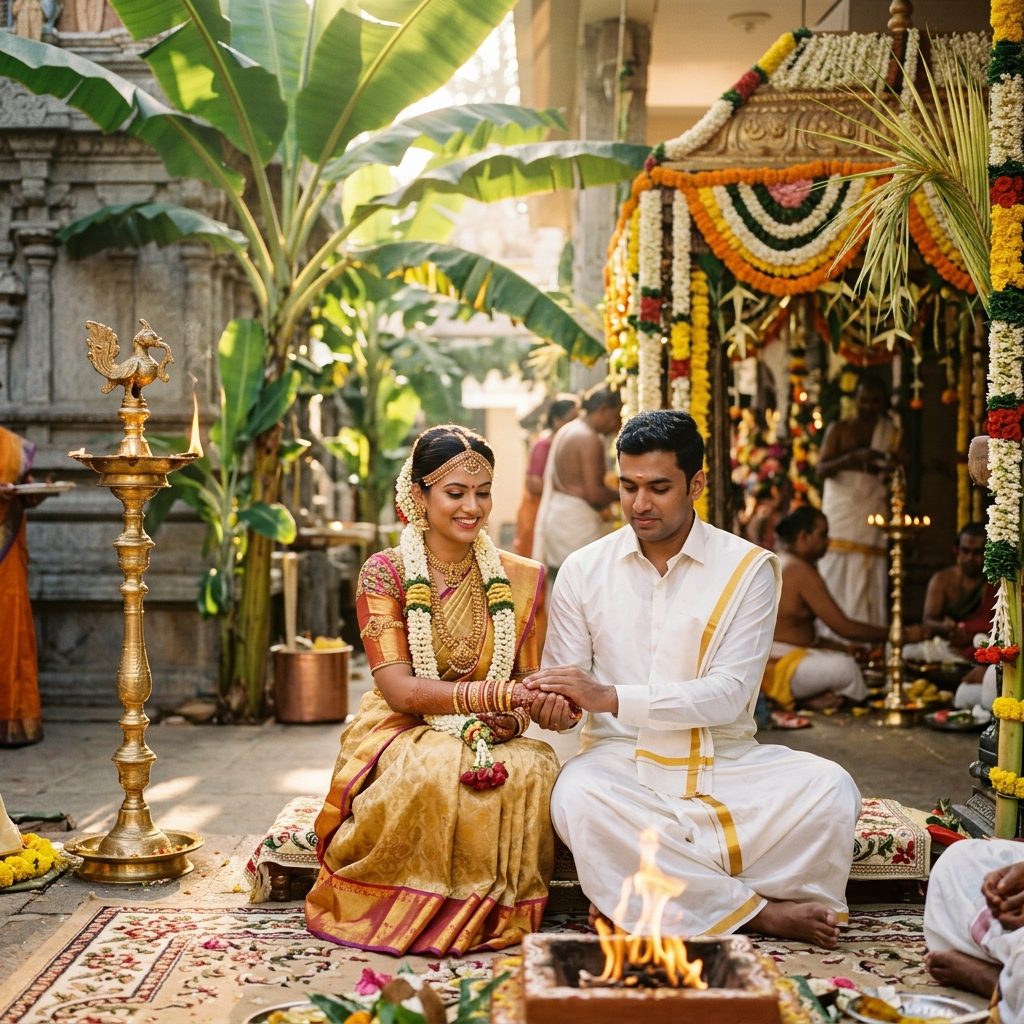
The South Indian wedding Muhurtham is a transcendent celebration of sacred vows, Vedic chants, and centuries-old heritage. Whether it is a Tamil Kalyanam, a Telugu Pelli, a Kannadiga Maduve, or a Kerala Kalyanam, the auspicious Muhurtham hour marks the precise cosmic moment when two souls unite. Because these ceremonies frequently take place during the early morning hours of Brahma Muhurtham, careful preparation is required to ensure that every sacred moment unfolds seamlessly.
Key Sacred Rituals of the South Indian Muhurtham
While subtle regional variations exist across South Indian states, core Vedic rituals form the foundation of every traditional ceremony. Understanding their cultural depth allows families to honor each custom with reverence.
Kanyadaanam and Vridham: The ceremony typically begins with purifying rituals. The bride’s parents entrust their daughter to the groom, symbolizing a sacred spiritual transition. The groom offers solemn promises to cherish and protect his bride throughout life's journeys.
Jeelakarra Bellam or Kashi Yatra: In Telugu traditions, the couple places a paste of cumin and jaggery on each other's heads at the exact Muhurtham minute, symbolizing their sweet and inseparable bond. In Tamil tradition, the groom pretends to embark on a pilgrimage to Kashi before being persuaded by the bride’s father to accept family life.
Mangalya Dharanam: The emotional peak of the wedding occurs when the groom ties the sacred Thali or Mangalsutra around the bride's neck to the powerful rhythm of the Kettu Melam played on the Nadaswaram. Three knots are tied, symbolizing devotion to husband, reverence for elders, and spiritual duty.
The sacred melody of the Nadaswaram reaching its crescendo during Mangalya Dharanam is not merely music; it is the collective heart of an entire family beating in prayer for the newlyweds.
Essential Pooja Samagri and Stage Setup Checklist
A traditional Mandapam requires specific sacred items. Having a dedicated family coordinator manage this checklist ensures the Priests and couple experience no delays during the auspicious window.
- Fresh Floral Garlands: Abundant stringed Jasmine, Marigold, and traditional Lotus garlands for the exchange of sacred Maalai.
- Brass Kuthuvilakku Lamps: Paired tall brass oil lamps placed strategically on both sides of the Mandapam, filled with pure sesame oil or ghee.
- Banana Stems and Mango Leaves: Fresh Vazhai Maram tied to Mandapam pillars to symbolize endless prosperity and family growth.
- Akshata and Coconut Trays: Unbroken raw rice mixed with organic turmeric powder and kumkum, arranged in silver or brass platters for guest blessings.
- Sacred Fire Essentials: Dry coconut husks, pure cow ghee, camphor, samidha sticks, and earthen pots for the Homa rituals.
Timeline Management for Early Morning Muhurthams
Unlike evening receptions, South Indian Muhurthams often require 4:30 AM or 6:00 AM stage readiness. Managing sleep schedules, traditional drape stylists, and priest arrival times is paramount for a peaceful morning.
Hair and makeup for traditional Kanjeevaram silk saree draping or nine-yard Madisar draping takes between two to three hours. Start the bridal preparation by 2:30 AM for a 5:00 AM ritual start. Coordinate with your priest the evening before to confirm that all pooja materials are pre-arranged inside the Mandapam.
Managing guest arrivals and morning tiffin catering for early Muhurthams can be challenging. To streamline communication with out-of-town relatives and track early morning venue arrivals effortlessly, explore Shubh Muhrat’s Guest Manager to send automated ceremony reminders, RSVP updates, and venue navigation details directly to your guests' phones.