
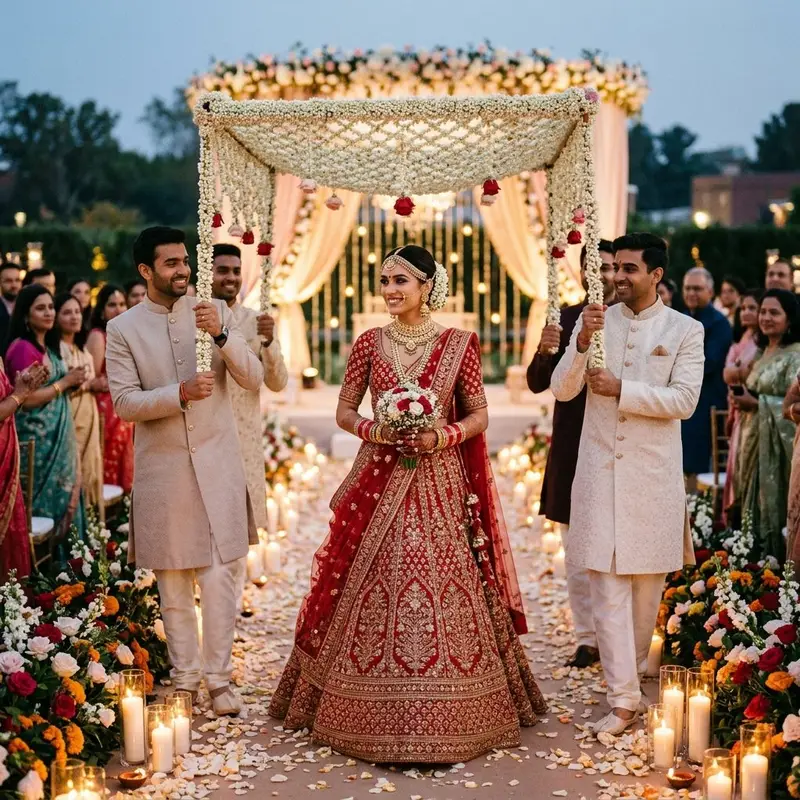
In the choreography of an Indian wedding, no moment carries more visual anticipation than the bridal entry. From the soft cadence of the chosen raag or entry track to the lifted edges of the phoolon ki chaadar, it is designed to feel timeless. Yet, behind the scenes, this precise transition is where wedding timelines face their greatest risk of fracture. A delayed entry ripples outward, pushing the Jai Mala, delaying the Kanyadaan, and compromising the sacred Lagna Muhurat carefully calculated by the family pandit.
The Backward Timeline: Counting Back from the Sacred Lagna
The most common planning error is anchoring the bridal entry to the estimated arrival of guests rather than the panditji's shubh muhurat. Whether your pheras are timed for the twilight grace of Godhuli Bela or an auspicious night lagna, the bridal entry must be backward-calculated with uncompromising margins.
A ceremonial walk down a 100-foot aisle while draped in an intricately embroidered lehenga or heavy Kanjeevaram silk—balanced with bridal footwear and bridal jewelry—takes between eight to twelve minutes. It is never a brisk stride. Furthermore, the bridal party accompanying under the canopy requires pacing adjustments, and photographers need brief pauses to capture expressions without blocking the view of the mandap.
- The 30-Minute Anchor: If the Jai Mala or Mandap entry is slated for 7:30 PM, the bride must step out of the bridal suite at precisely 7:10 PM.
- The Stage Clearance Buffer: Allocate a five-minute window before the entry begins for venue coordinators to clear stray guests from the central aisle.
- The Breath Window: Reserve three quiet minutes right outside the ceremony hall doors for the bride to take a breath, adjust her veil, and hydrate.
The bridal walk is not merely a cinematic corridor; it is the bridge between personal reflection and lifelong vows, deserving unhurried composure and ritual precision.
Managing the Baraat Ripple Effect
Traditional timelines frequently derail during the groom's procession. Extended dhol sets at the gate, playful resistance during the Dwar Pooja or Gujarati Ponkhana, and the formal exchange of garlands during the Milni can easily swallow forty unexpected minutes.
To protect the bride's composure, do not tie the final dupatta setting or veil placement to the Baraat's initial arrival at the venue gate. Instead, establish the completion of the Milni as the definitive trigger for the bridal suite. Once the groom steps past the threshold and is escorted toward the stage or mandap, the bride receives her final twenty-minute cue. This prevents the bride from waiting in full bridal regalia for over an hour, avoiding fatigue, wilting hair florals, and unnecessary anxiety.
Aisle Discipline and Guest Coordination
Even with impeccable backstage coordination, an entry can stall if guests remain scattered around live food counters or obstruct the bridal passage. The grand spectacle falls flat when photographers must shout past aunties and cousins blocking the aisle to capture the bride's first glance.
A seamless entry relies on coordinated announcements. Before the opening notes of the bridal entry track play, an emcee or wedding coordinator must gently request that guests take their seats. You can effortlessly manage guest logistics, schedule alerts, and ceremony timelines with Shubh Muhrat's Guest Manager, ensuring your attendees are comfortably seated and ready when the sacred moment unfolds.