
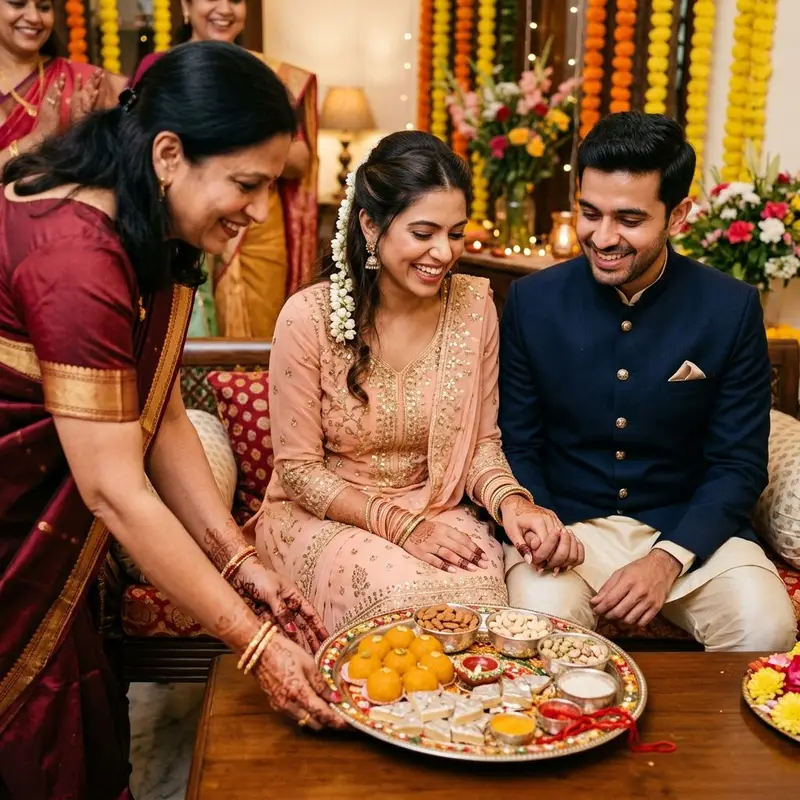
The Roka ceremony marks the official beginning of an Indian wedding journey. Derived from the Punjabi word "Rokna," which literally means to stop or prevent, the Roka signifies that the search for a partner has officially ended. Both families come together to secure the alliance, publicly announcing their commitment to the upcoming union. While historically a simple, intimate affair, the modern Roka has evolved into a significant pre-wedding celebration requiring careful navigation of tradition and contemporary etiquette.
The Cultural Significance of Roka
Traditionally, the Roka was a small gathering at the bride’s home, where only immediate family members were present. The groom's family would visit with gifts, sweets, and fruits, symbolizing their consent and blessing. Today, the core sentiment remains unchanged: it is the formal handshake between two families. The ritual usually begins with a small puja, followed by the Tilak ceremony, where the bride's father applies vermilion on the groom's forehead. Shagun—gifts of cash, clothes, dry fruits, and sweets—is exchanged to cement the bond, ensuring both families are now officially locked in the relationship.
The Roka is more than just a ceremony; it is the gentle merging of two distinct family trees, rooted in mutual respect, blessings, and the shared joy of a new beginning.
Modern Roka Etiquette and Guest Lists
As weddings become grander, the Roka has also expanded. However, modern etiquette suggests keeping this event intimate. Unlike the engagement or the wedding, the Roka is best shared with immediate family, close relatives, and a few lifelong friends. Hosting a massive crowd can dilute the personal nature of the event and put unnecessary pressure on both families early in the wedding timeline. It is perfectly acceptable to host the Roka at a cozy restaurant, a banquet hall, or a beautifully decorated home terrace. The key is to create an environment where the two families can comfortably interact and get to know one another.
Navigating Gifts and Expenses Gracefully
Gift-giving during the Roka can sometimes feel overwhelming. To ensure a smooth ceremony without awkwardness, keep these modern guidelines in mind:
- Define Gift Expectations Early: Clear communication between the couple is essential. Discuss whether you will exchange heavy jewelry, simple tokens, or skip formal gifts entirely.
- Split the Hosting Costs: Traditionally, the bride’s family hosts the Roka, but modern couples often split the expenses equally or have the groom’s family host a subsequent dinner.
- Keep the Shagun Practical: Instead of heavy silver platters, modern families are opting for customized hampers of artisanal chocolates, organic teas, or gourmet dry fruits.
- Digital Invites Over Print: Since the guest list is small, there is no need for printed cards. Send elegant digital invitations to keep the process seamless and eco-friendly.
Once the Roka is successfully completed, the countdown to the wedding truly begins. Sharing this joyous announcement with your extended circle deserves a beautiful touch. You can design stunning, culturally rich digital invitations for your upcoming events using the Shubh Muhrat Invite Studio, which offers customizable templates that reflect your personal style and heritage.