
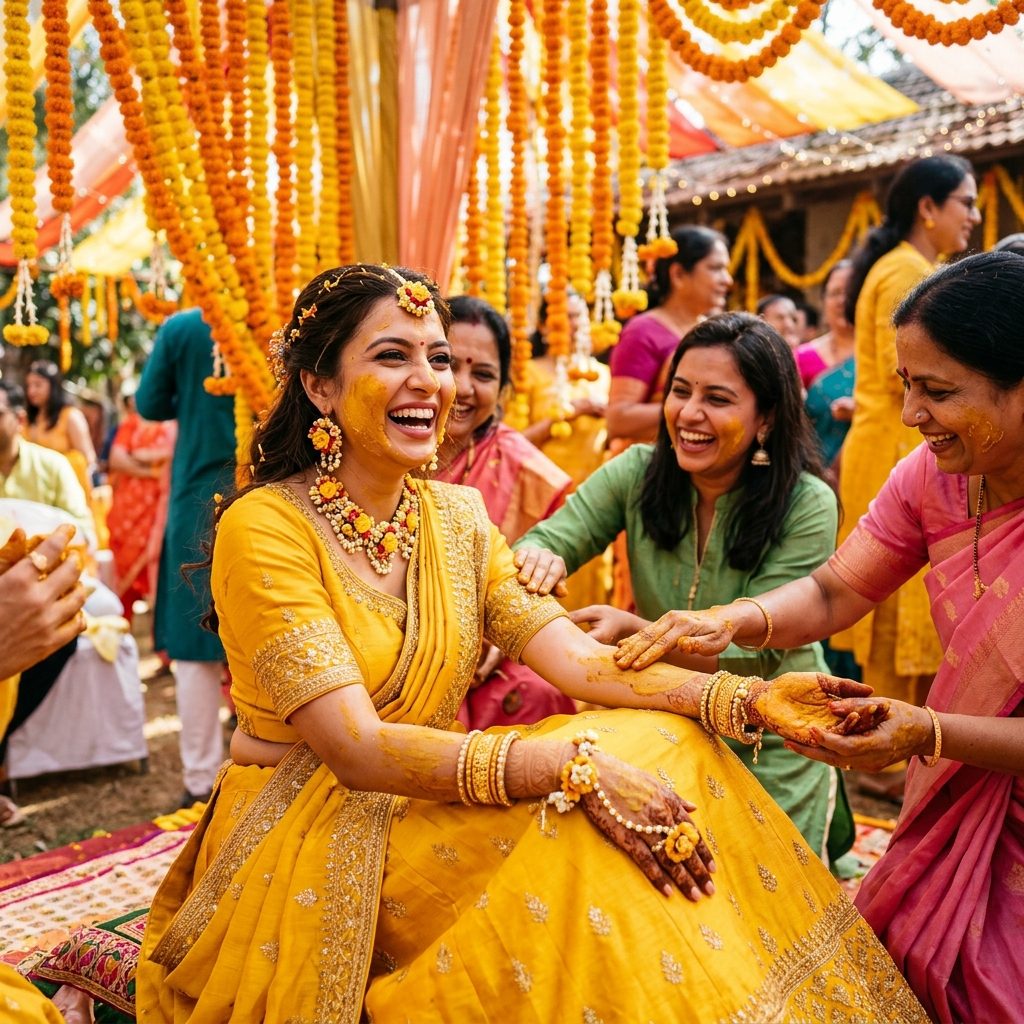
The Haldi ceremony, painted in vibrant shades of yellow, is one of the most animated and joyous pre-wedding rituals in Indian weddings. Known by various names across different regions—such as Ubtan in the North, Gaye Holud in Bengal, Halad in Maharashtra, and Mangala Snanam in the South—this ceremony is far more than just a playful gathering of family members smearing yellow paste on the bride and groom. It marks the official start of the wedding festivities, transforming the home into a sanctuary of laughter, music, and yellow hues. It is a deeply rooted tradition that blends spirituality, ancient science, and social bonding.
Purification and the Natural Glow
Historically, the application of Haldi (turmeric) served as an ancient beauty treatment long before modern cosmetics existed. Turmeric is renowned for its antiseptic, anti-inflammatory, and skin-brightening properties. The traditional paste, made by mixing turmeric powder with sandalwood powder, milk, and rose water, acts as a natural exfoliant. Applying this mixture ensures that the bride and groom achieve a radiant, natural glow for their wedding day. Beyond the cosmetic benefits, the ritual is also believed to purify the couple's minds and bodies, preparing them spiritually for the sacred nuptial vows. Additionally, turmeric is considered highly auspicious in Hindu rituals. It represents a cleansing of the past and a purification of the self before stepping into a sacred covenant. The application of the paste by elders is a physical manifestation of their blessings for the couple's long and healthy life.
Warding Off the Evil Eye and Negative Energy
In Indian culture, the transition from singlehood to married life is considered a highly sensitive period. Haldi is believed to possess protective properties that shield the bride and groom from negative energies and the "buri nazar" (evil eye). This is why, traditionally, once the Haldi ceremony is completed, the bride and groom are not allowed to leave their respective homes until the actual wedding ceremony. It acts as a protective shield, ensuring the couple remains safe and healthy as they approach their big day. The yellow color itself represents energy, prosperity, and the beginning of a fertile, happy life together.
The laughter shared during the Haldi ceremony represents the transition from formal wedding preparations to pure, unadulterated familial joy, binding two families in a circle of warmth and protection.
Regional Customs and Community Bonding
While the core ingredient remains turmeric, the customs associated with it change beautifully across India, highlighting the country's rich diversity:
- Gaye Holud: In Bengali weddings, the groom’s family sends the Haldi paste used on the groom, along with a decorated Rohu fish and gifts, to the bride’s home for her ceremony.
- Tel Baan: In Rajasthan and Uttar Pradesh, oil and mustard seeds are applied along with the haldi using grass whisks, symbolizing fertility and physical nourishment.
- Mangala Snanam: In South Indian weddings, the ceremony culminates in a holy bath where the couple is showered with sanctified water to wash away the paste.
Sharing the Joy and Planning Ahead
Today, the Haldi ceremony has evolved into a highly instagrammable, themed event filled with marigold decor, dhol beats, and coordinated yellow outfits. To ensure all your loved ones are present to paint you in shades of gold, seamless planning is key. You can design beautiful, custom-themed digital invitations for your pre-wedding rituals using the Shubh Muhrat Invite Studio, making it easy to share the schedule and dress code with your guests. Whether you follow strict Vedic steps or opt for a modern poolside party, the essence of Haldi remains a beautiful blessing of love, health, and prosperity.