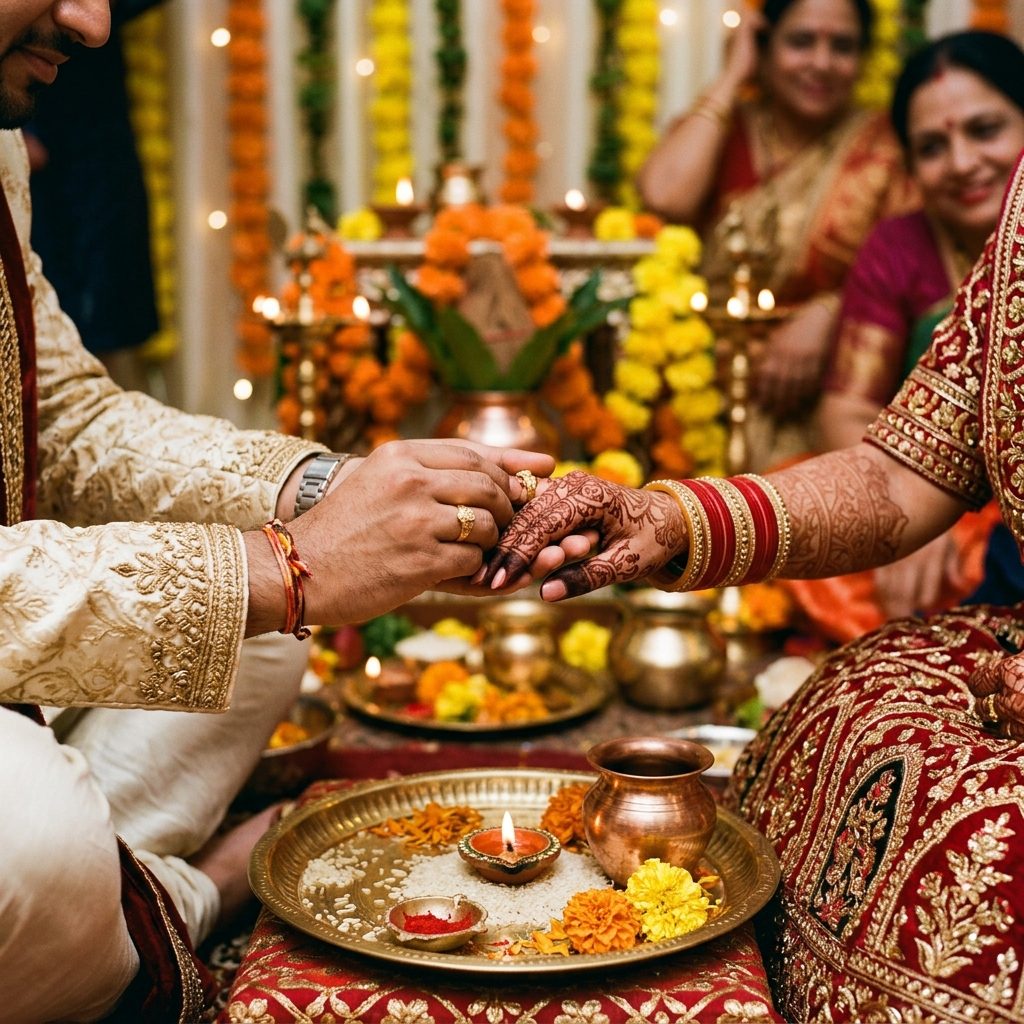
The engagement ceremony, known variously as Sagai, Roka, Ring Ceremony, or Nishchayam, is the official prelude to an Indian wedding. It marks the formal agreement between two families and the beginning of the couple's journey together. While modern celebrations often resemble a grand party, the core of an Indian engagement remains deeply rooted in traditional rituals and family blessings.
Understanding Key Regional Engagement Customs
Across India, this ceremony takes on different names and cultural flavors. In Northern India, the journey often begins with a Roka, securing the relationship, followed by the Sagai or Tilak, where the groom is officially welcomed by the bride’s family. In Western states like Gujarat, the Gor Dhana (coriander seeds and jaggery) ceremony involves distributing sweets to guests, symbolizing a sweet and healthy beginning. In South India, the Nishchayam or engagement custom is a formal announcement made in the presence of family priests, often involving the exchange of visual representations of the marriage agreement.
The Sagai is not merely a social event; it is a sacred pact where two families promise to support and nurture the upcoming union, seasoned with prayers and ancient Vedic mantras.
Essential Rituals and the Ring Exchange
The ceremony typically commences with a small Ganesh Puja to ward off obstacles and invite auspicious energies. Following this, the groom is welcomed with a traditional aarti, tilak, and sweets. The exchange of rings is the central highlight, representing an eternal bond of love and commitment. During this time, the bride’s family presents the groom’s family with beautifully curated gifts, traditionally consisting of dry fruits, traditional sweets, clothing, and silver or gold coins, known as sagan. The couple then seeks the blessings of all elders, who shower them with akshat (holy rice grains colored with turmeric) and flowers.
A Checklist for a Seamless Sagai Ceremony
Planning an engagement requires balancing tradition with modern hospitality. Here are the key steps to ensure your ceremony runs smoothly:
- Consult a Priest: Find an auspicious Hindu Muhurat or a date suited to your family's astrological calendar.
- Define the Guest List: Keep it intimate. Unlike the wedding, the Sagai is traditionally meant for close family and friends.
- Curate the Decor: Opt for traditional marigold chains, brass lamps, and floral backdrops that reflect the warmth of Indian festivities.
- Coordinate the Attire: Choose outfits that are elegant yet comfortable. The bride typically wears a light lehenga or an heirloom saree, while the groom opts for a Nehru jacket or a Bandhgala.
- Plan the Menu: Offer traditional regional delicacies alongside popular crowd-pleasing snacks and desserts.
Announcing Your Joyous Milestone
Once the date is set and the rituals are planned, the next step is sharing this joy with your loved ones. Elevate your celebration by designing a beautiful digital invitation. Using the Shubh Muhrat Invite Studio, you can create elegant, culturally resonant e-invites that reflect your regional traditions and set the perfect tone for your upcoming Sagai.