
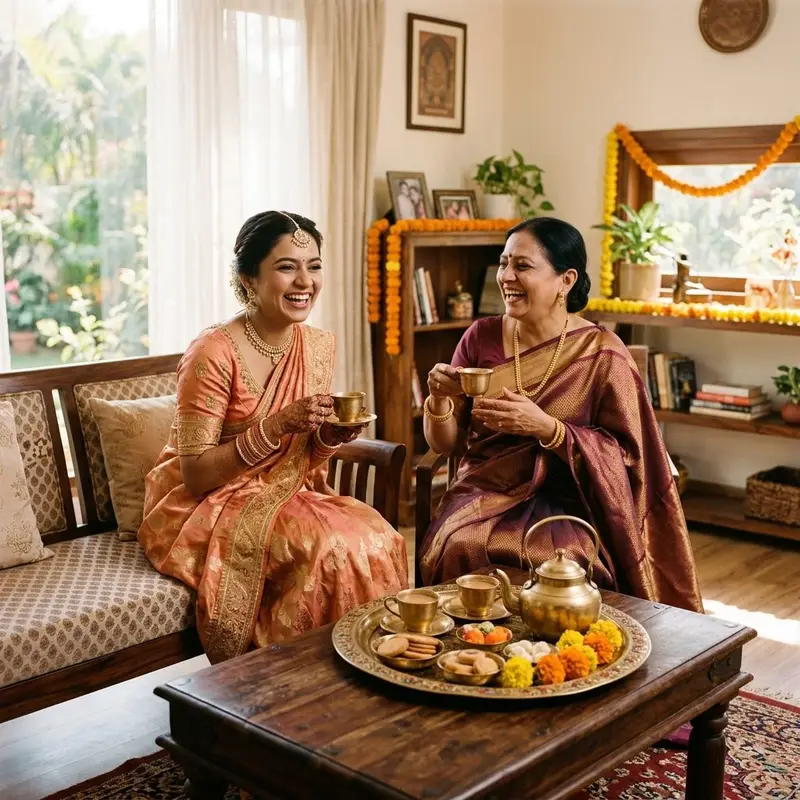
In an Indian marriage, the old adage rings undeniably true: two families marry, not just two individuals. While pre-wedding excitement often centers on designer lehengas, choreographing the sangeet, and finalizing menus, the groundwork for a peaceful married life is laid in the quiet interactions between you and your future in-laws months before the celebrations begin.
Cultural differences, unspoken assumptions about hierarchy, and differing family habits can breed silent anxiety. Whether you are marrying into a different regional community or simply into a household with distinct traditions, taking an intentional approach to in-law relationship preparation ensures that your bond starts with mutual respect rather than friction.
1. Act as Cultural Translators, Not Messengers
The most common mistake couples make during the engagement phase is acting as passive conduits for complaints between their respective parents. If your mother worries about how the Milni gifts will be handled, or your future mother-in-law has strict expectations about morning puja attire, do not merely forward their words unfiltered.
Instead, act as cultural translators. Explain the emotional significance behind a custom to your partner rather than simply passing down rigid demands. When each partner takes responsibility for softening family feedback and clarifying intentions, you protect the budding relationship from unnecessary defensiveness.
In an Indian wedding, harmony between in-laws is rarely accidental; it is built when partners choose to interpret each other’s families with generosity rather than judgment.
2. Clarify Shagun and Gifting Protocols Early
Few topics cause more covert discomfort between Indian in-laws than wedding gifting and shagun envelopes. Customs vary wildly: one family might practice extensive gifting for every extended aunt and uncle during the Tilak or Roka, while another believes in keeping exchanges minimalist and intimate.
To prevent awkward misunderstandings, have an honest, private conversation with your partner about your family's customary practices:
- Exchange parameters: Discuss openly whether traditional gifts like sarees, dry fruits, or gold coins are expected for close elders during milestone rituals.
- Dietary traditions: Clarify whether functions must be purely vegetarian, Satvik, or if non-vegetarian dishes and alcohol are welcomed.
- Host courtesies: Align on who coordinates welcome hampers and transport logistics for out-of-town relatives.
3. Decode Daily Rhythms and Living Habits
Whether you plan to live in a joint family or set up an independent household nearby, spending time understanding your in-laws' daily rhythms prevents friction. Does the family gather for early morning tea and require formal greetings, or are mornings quiet and independent? Are weekends reserved for drop-in visits from extended relatives?
Spend informal time with future in-laws before the wedding outside of ceremonial settings. A casual Sunday lunch or helping select wedding invites creates natural opportunities to observe family dynamics without the ceremonial stiffness of formal visits.
4. Keep Shared Logistics Transparent
Disagreements over wedding guest counts frequently spill over into personal resentment between in-laws. When parents feel their side of the family is shortchanged on room allotments or VIP seating, relationships strain before the marriage even begins.
Using digital tools like Shubh Muhrat's Guest Manager helps both sides maintain a shared, transparent view of family delegations, travel logistics, and RSVP tracking. When guest counts and room bookings are managed collaboratively in real time, it eliminates suspicion and fosters a spirit of joint hospitality.
Investing effort into understanding your future in-laws is not about changing your identity or walking on eggshells. It is about laying a foundation of warmth, clear communication, and gracious compromise that supports your marriage for decades to come.