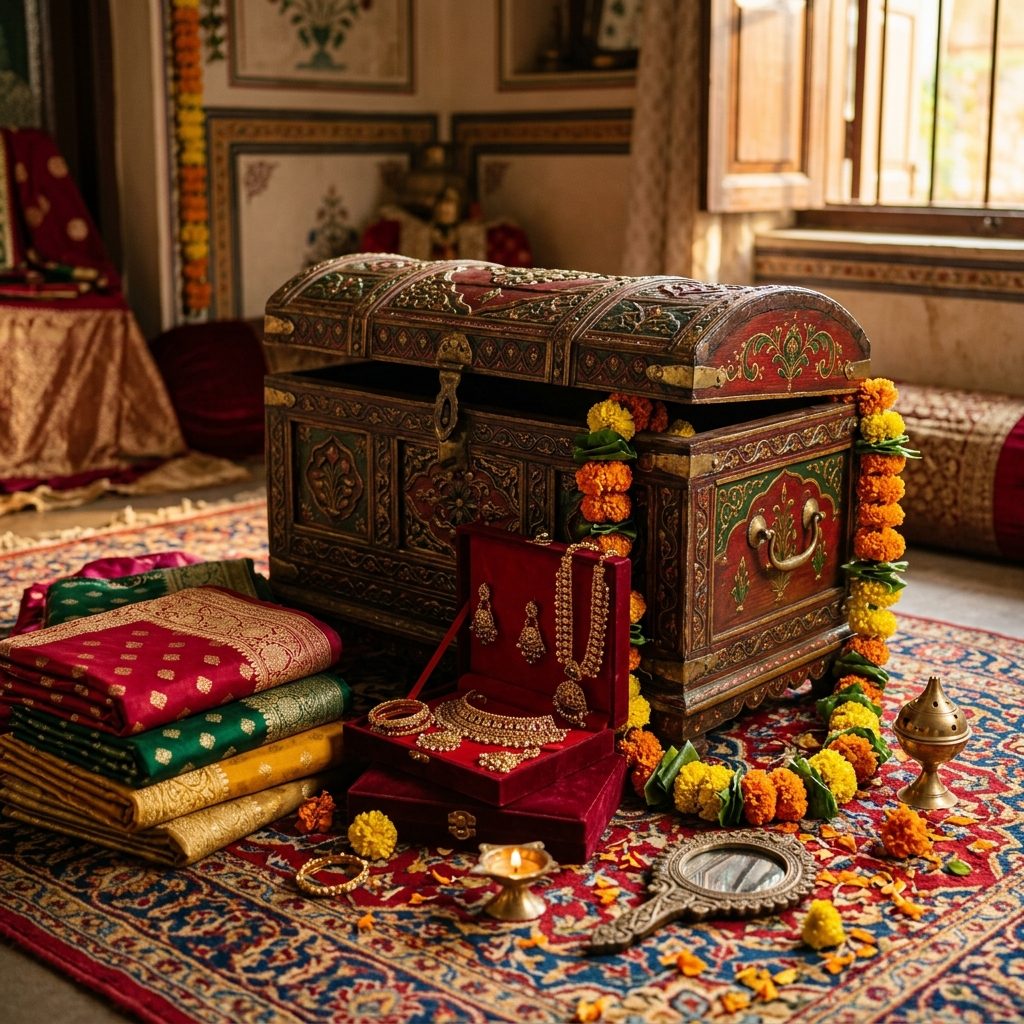
The tradition of the bridal trousseau—known across various Indian regions as the Sandook, Patara, or Pelli Pette—is one of the most heartwarming aspects of Indian wedding preparations. Historically, the trousseau represented a bride’s emotional and financial foundation as she transitioned into her new home. It carried handwoven textiles, blessed heirlooms, gold coins, silver utensils, and handcrafted linens passed down through generations. Today, while wedding aesthetics and lifestyle needs have evolved, the essence of curating a meaningful trousseau remains deeply rooted in Indian sentiment and tradition.
The Heritage of the Indian Bridal Sandook
Every region in India brings its own sacred touch to the bridal chest. In Punjabi and North Indian households, the traditional Sandook or trunk was lovingly filled with Phulkari dupattas, heavy suits, and family gold. In Gujarat and Rajasthan, the bride’s Patara contained intricate Bandhani sarees, embroidered quilts, and silver anklets. Down south, the Telugu Pelli Pette held pristine Kanjeevaram silk sarees blessed during pre-wedding rituals. These items were not merely possessions; they represented the blessings of elders, meant to provide comfort, prestige, and security to the bride as she embarked on her marital journey.
Curating Essentials: Balancing Sacred Legacy and Modern Utility
A modern trousseau requires a thoughtful balance between high-end ceremonial attire and versatile post-wedding outfits. Rather than buying dozens of heavy bridal lehengas that sit unused in wardrobes, brides today focus on versatility, fabric longevity, and timeless grace. When assembling your trousseau, prioritize pieces that serve specific cultural rituals like the Pag Phere, post-wedding family pujas, dinner receptions, and seasonal gatherings.
- Sacred Handlooms: Invest in real weave classics like Kanjeevaram, Banarasi Silk, Chanderi, or Patola. These sarees never go out of style and actually appreciate in sentimental value.
- Versatile Semi-Formals: Stock up on breathable Anarkalis, Chikankari kurta sets, and lightweight chiffon sarees for everyday family gatherings and post-wedding festivities.
- Jewellery and Heirlooms: Separate heavy wedding jewellery from daily wear staples. Keep lightweight gold chains, diamond studs, and classic silver jewelry accessible for daily use.
- Functional Accessories: Padded juttis, neutral metallic heels, versatile clutches, embroidered shawls, and tailored blouses that can be mixed and matched with multiple sarees.
A bride’s trousseau is not merely a collection of fine clothes and jewellery; it is the physical thread weaving her beloved past into her promising future.
Preserving Handcrafted Textiles for Generations
Proper storage is essential to ensure your trousseau remains pristine for decades. Pure Zari sarees and handwoven silks should never be wrapped in synthetic plastic or polythene, as trapped moisture can oxidize pure silver and gold threads. Instead, wrap your silk sarees in breathable, unbleached white cotton or muslin cloths. Avoid spraying perfumes directly onto zardosi or gota patti embroidery, and refold heavy sarees every six months along different fold lines to prevent permanent creases or fabric tears.
Organizing Your Post-Wedding Functions Effortlessly
As you prepare your trousseau for post-wedding rituals and welcoming family members, keeping track of events, guest lists, and logistics can become overwhelming. Managing your wedding timeline and guest itineraries should be as smooth as your trousseau planning. With the Shubh Muhrat Guest Manager, you can easily organize your wedding functions, manage RSVP lists, and coordinate post-wedding events seamlessly so you can focus on celebrating every ritual with your loved ones.