
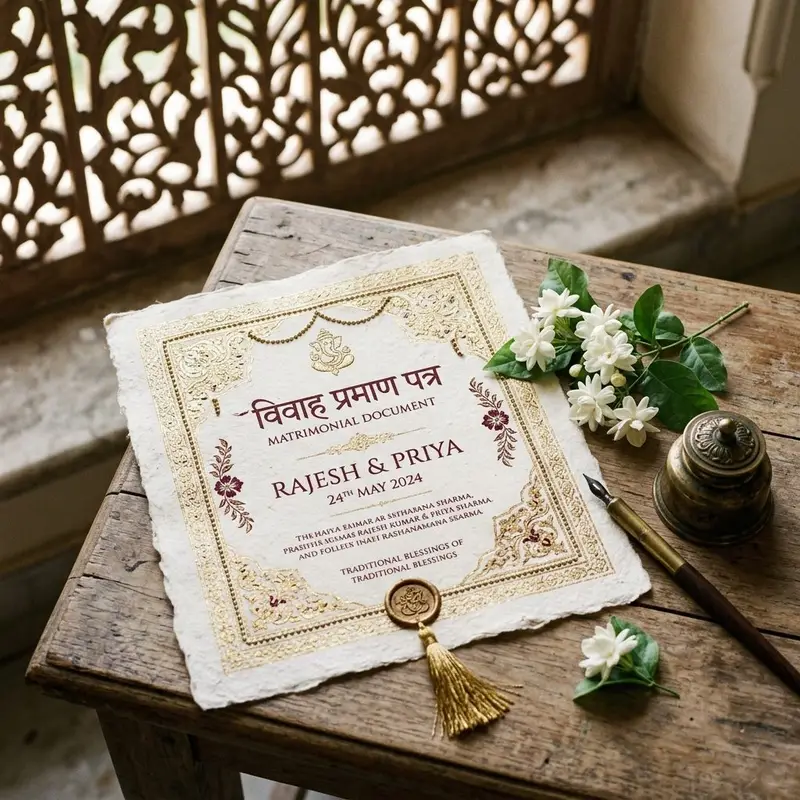
When families receive a marriage biodata, their initial impression forms within seconds. Long before they absorb details regarding gotra, academic degrees, or professional achievements, their eyes register the visual dignity of the presentation. In Indian matchmaking, a biodata is neither a sterile corporate curriculum vitae nor an ornate multi-page wedding invitation. It occupies a distinct, revered cultural space. The border design you select anchors this impression, establishing a tone of warmth, cultural respect, and refinement.
The Cultural Meaning of Regional Motifs
Historically, Indian life celebrations have always employed sacred geometry and decorative borders to demarcate auspicious documents. In wedding patrika traditions, border friezes served as visual blessings. Today, incorporating traditional Indian art forms into biodata borders connects modern individuals to their ancestral roots without appearing antiquated.
- Pichwai Lotus Borders: Originating from Nathdwara in Rajasthan, the stylised lotus bud and blooming petals signify spiritual grace and auspicious beginnings. When rendered in fine line art, lotus borders lend an earthy, serene aura ideal for families valuing Vaishnav traditions.
- Mughal and Rajasthani Jaali Lines: Drawing inspiration from the delicate perforated stone screens of Fatehpur Sikri and Jaipur palaces, geometric lattice borders convey architectural symmetry and timeless sophistication.
- Kashmiri Paisley (Kalka): The curved teardrop motif, deeply woven into bridal shawls and royal textiles, embodies prosperity and continuity. Slender paisley corner flourishes add regal polish without consuming vital page space.
- Temple Gopuram and Peepal Friezes: Favoured across South Indian traditions, understated temple spire contours or sacred fig leaf runners honour generational devotion while keeping the layout grounded and dignified.
A marriage biodata is neither an informal invitation nor a corporate resume; its frame should whisper family heritage, not scream for attention.
Balancing Aesthetics and Visual Clarity
The primary error many families make when customising a marriage profile is selecting heavy, brightly coloured borders that crowd out essential text. A border must frame the content, never compete with it. If the horoscope table, nakshatra details, or educational qualifications are pushed into cramped, illegible margins, the document fails its fundamental purpose.
To maintain visual harmony, the outer frame should ideally occupy no more than ten to fifteen percent of the total page area. Fine hairline borders accented with graceful corner vignettes consistently outperform dense, multi-layered clip art. White space around the text is not wasted paper; it is visual breathing room that allows prospective families and elders to review details comfortably without optical fatigue.
Selecting an Auspicious, Elegant Colour Palette
Colour choice in Indian customs carries profound symbolic weight. While deep sindoor red and bright turmeric yellow are sacred for wedding ceremonies, they can easily overpower an A4 biodata page when applied as heavy border ink. Understated interpretations of auspicious shades create a far more sophisticated result.
Consider pairing soft ivory, cream, or warm beige backgrounds with borders rendered in muted antique gold, champagne, deep maroon, forest green, or subtle royal navy. These combinations retain the sanctity expected by elders while appealing to modern sensibilities. The contrast between your chosen border colour and the background must feel soothing rather than jarring.
Crafting a profile that harmonises traditional heritage with clean contemporary typography is simple when you have the right design canvas. You can explore curated, culturally respectful templates using the Biodata Maker by Shubh Muhrat, ensuring your family introduction is presented with the elegance and reverence it deserves.