
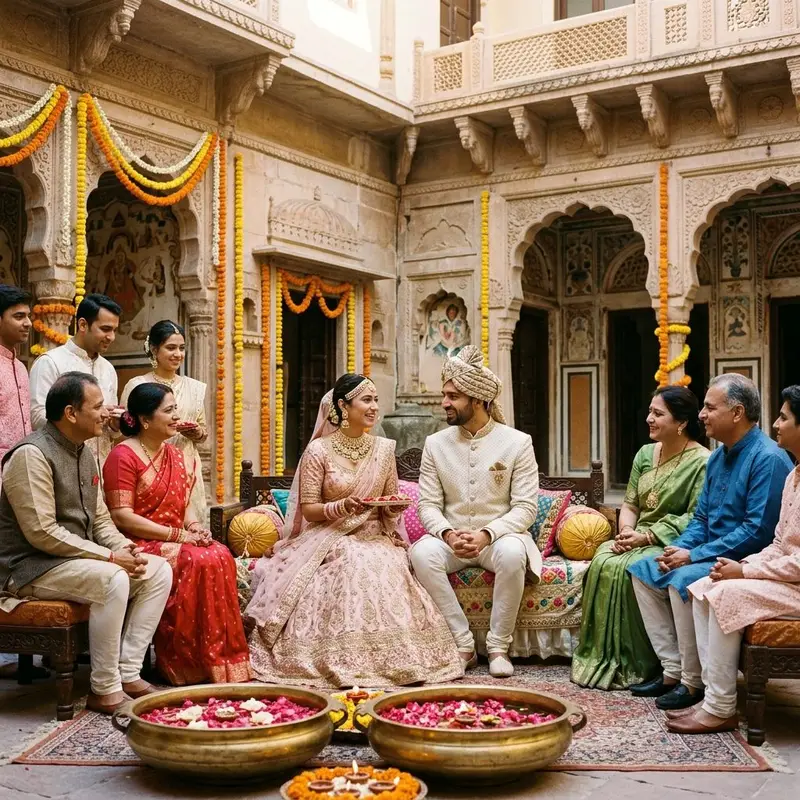
In traditional Marwari matchmaking, matrimonial biodatas circulate with remarkable speed across extended family networks, community trusts, and WhatsApp groups. Yet, while families devote meticulous effort to cataloging academic credentials, ancestral roots, and business holdings, the partner preferences section is routinely condensed into a single, vague line: "Looking for a well-educated, cultured match from a respectable family."
This ambiguity often leads to weeks of polite telephone conversations, mismatched expectations, and awkward withdrawals after horoscopes have already been matched. In a community where entrepreneurship, deep spiritual traditions, and modern professional ambitions intersect, defining your partner preferences with honesty and cultural precision is essential for a lasting alliance.
Defining Career Continuity and Relocation Realities
Contemporary Marwari brides and grooms are frequently leaders in high-intensity corporate careers—ranging from chartered accountancy and corporate law to tech leadership and venture capital. At the same time, many prominent Marwari families operate manufacturing or trading headquarters in industrial hubs such as Surat, Bhilwara, Raipur, or Indore.
If a candidate is rooted in a corporate career in Mumbai or Bengaluru and wishes to remain in a tier-one metro post-marriage, state this directly. Conversely, if a groom expects his partner to relocate to an ancestral city and contribute to an established family enterprise, transparency prevents future resentment. For career-oriented women, framing professional commitment respectfully signals focus while honoring family values.
Articulating Dietary Boundaries and Spiritual Rhythms
Dietary customs in Marwari homes—whether Maheshwari, Oswal, Agrawal, or Khandelwal—are deeply linked to faith, sanctity, and daily living. Assumptions around food practices are one of the most frequent causes of discomfort during formal family meetings.
Articulating your lifestyle parameters avoids unspoken friction:
- Dietary disciplines: Clarify whether your household observes strict chovihar (eating before sunset) or avoids root vegetables (kandmool) under Jain traditions.
- Social habits: If living in a strict vegetarian or teetotaler household is a non-negotiable value, state it plainly and politely.
- Spiritual traditions: Mention active observance of rituals, whether daily Thakurji seva, Pushtimargiya traditions, or community observances during Paryushan and Gangaur.
Clarity in your matrimonial biodata is not an act of exclusion; it is an act of deep respect for another family's values, daily faith, and peace of mind.
Setting Expectations on Living Dynamics
Marwari wedding celebrations, from Mudda-Tika to Bhaat, celebrate the warmth of large extended families. However, everyday living arrangements vary widely today. Some families flourish in multi-generational joint households where festivals like Diwali Chopda Pujan bring dozens of relatives under one roof. Other couples must maintain independent households near business or corporate workplaces.
Specifying comfort with joint family living—or the practical necessity of setting up a nuclear home due to work—helps both sets of parents assess compatibility without awkward negotiations later. When expectations around family involvement and elder care are stated warmly, it reflects maturity and foresight.
A thoughtful biodata filters out polite mismatches and invites families who genuinely share your worldview. To craft an elegant, comprehensive profile that balances heritage with modern life, create your profile using the Shubh Muhrat Biodata Maker to put your best foot forward.