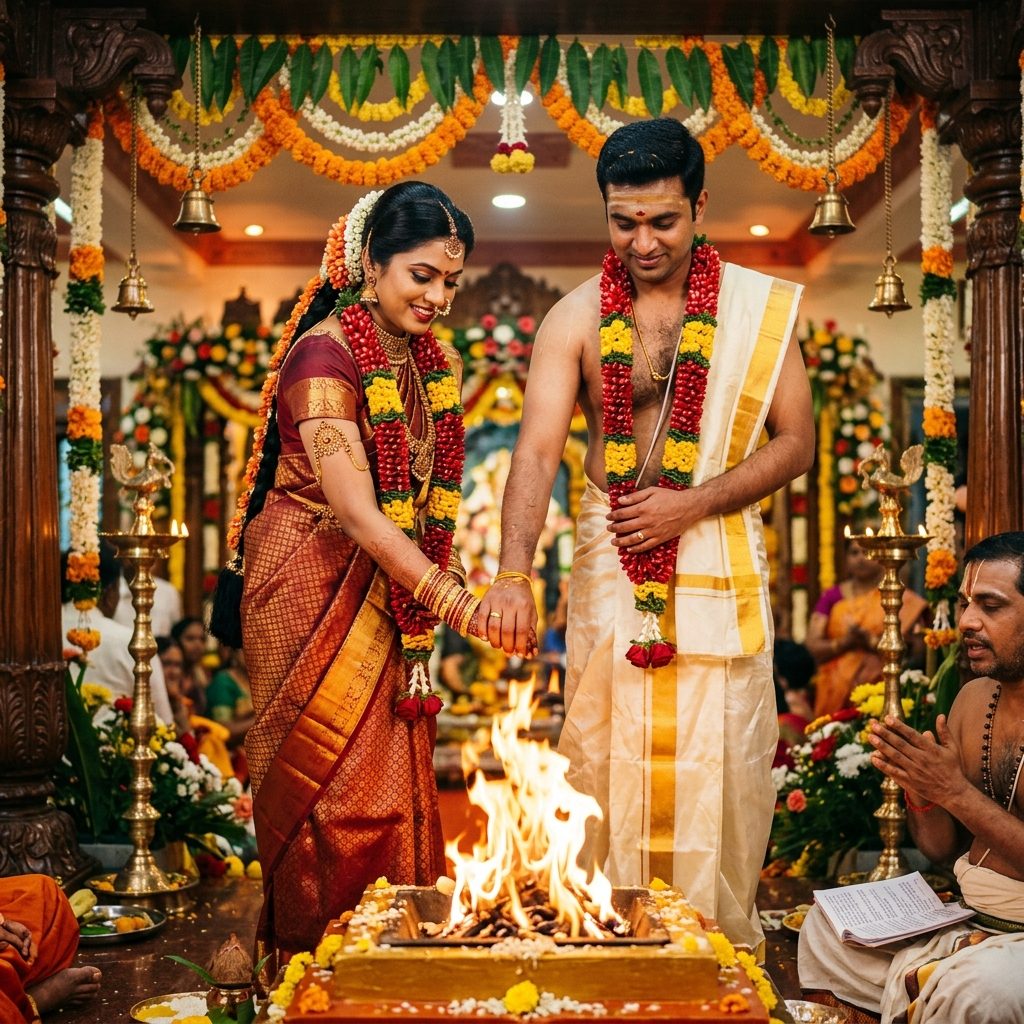
A Tamil Brahmin (Tambrahm) wedding, whether Iyer or Iyengar, is a beautiful tapestry of Vedic rituals, deep-rooted family traditions, and joyous celebrations that span over two to three days. From the majestic, resonant notes of the nadaswaram to the vibrant rustle of traditional Madisar Kanjeevaram sarees, every single element holds a profound spiritual and social significance. Understanding these ancient customs can help couples and their families appreciate the sacred vows they are taking, turning rituals into deeply personal experiences.
Pre-Wedding Sanctity: Vratham and Janavasam
The wedding festivities typically begin a day before the main ceremony with the Vratham. Performed separately by the bride and the groom, this ritual involves tying a sacred yellow thread (Kappu) around their wrists to ward off evil spirits and signify their commitment to the upcoming vows. The groom transitions from bachelorhood (Brahmacharya) to the householder stage (Grihastha), seeking blessings from his ancestors and the deities.
This is followed by the Janavasam (or Mapillai Azhaippu), a vibrant procession where the groom arrives at the wedding venue. Historically, the groom would ride in a chariot; today, a decorated car is used. The bride’s family greets him warmly with music, coconuts, and traditional sweets, officially welcoming him into their fold before the main rituals begin the next morning.
The Playful and Poetic: Kashi Yatra and Oonjal
On the wedding morning, one of the most delightful and theatrical rituals is the Kashi Yatra. In a playful enactment, the groom pretends to renounce worldly pleasures to head to Kashi for spiritual pursuit, carrying a hand-painted umbrella, a walking stick, fan, and footwear. The bride’s father intervenes, persuading him to return and accept his daughter's hand in marriage, pointing out the virtue of the Grihastha dharma.
"The Kashi Yatra beautifully reminds us that the householder life, filled with love, companionship, and duty, is just as sacred and spiritually fulfilling as a life of asceticism."
After the groom agrees and returns, the couple meets for the exchange of garlands (Malai Maatral) and is seated on a decorated wooden swing (Oonjal). Here, married women from both families sing traditional Carnatic songs, feed the couple milk and bananas, and wave colored rice balls (pidi suthal) in all four directions to ward off the evil eye. The swinging motion represents the couple's ability to stay balanced, anchored, and joyous together through the undulating waves of life.
The Sacred Union: Kanyadaanam and Saptapadi
The core of the wedding begins with the Kanyadaanam, where the bride sits on her father’s lap as he gives her hand in marriage to the groom. During this time, the bride is gifted the traditional nine-yard Kanjeevaram silk saree, known as the Kooraipattu. She changes into this auspicious attire before returning to the mandapam. The groom then ties the sacred Mangalyam (Thaali) around the bride's neck amidst a crescendo of nadaswaram music and the blessings of the assembly.
Following this, the couple performs the crucial Vedic vows:
- Saptapadi: The couple takes seven steps around the holy fire (Agni), cementing their lifelong friendship, spiritual partnership, and division of duties.
- Ammi Midhithal: The groom guides the bride's right foot onto a granite grinding stone (ammi), symbolizing that she should be as rock-solid and resilient as stone during life's adversities.
- Arundhati Darshanam: The priest points out the twin stars Alcor and Mizar (Arundhati and Vashistha) in the sky, representing eternal marital devotion and companionate equality.
- Laja Homam: The bride's brother offers puffed rice to the holy fire as a prayer for the couple's long life and prosperity.
Navigating these multi-day rituals and ensuring all your extended family and friends are present is a beautiful journey. To invite your loved ones with elegance and ease, you can design stunning digital invitations representing your heritage using the Shubh Muhrat Invite Studio.