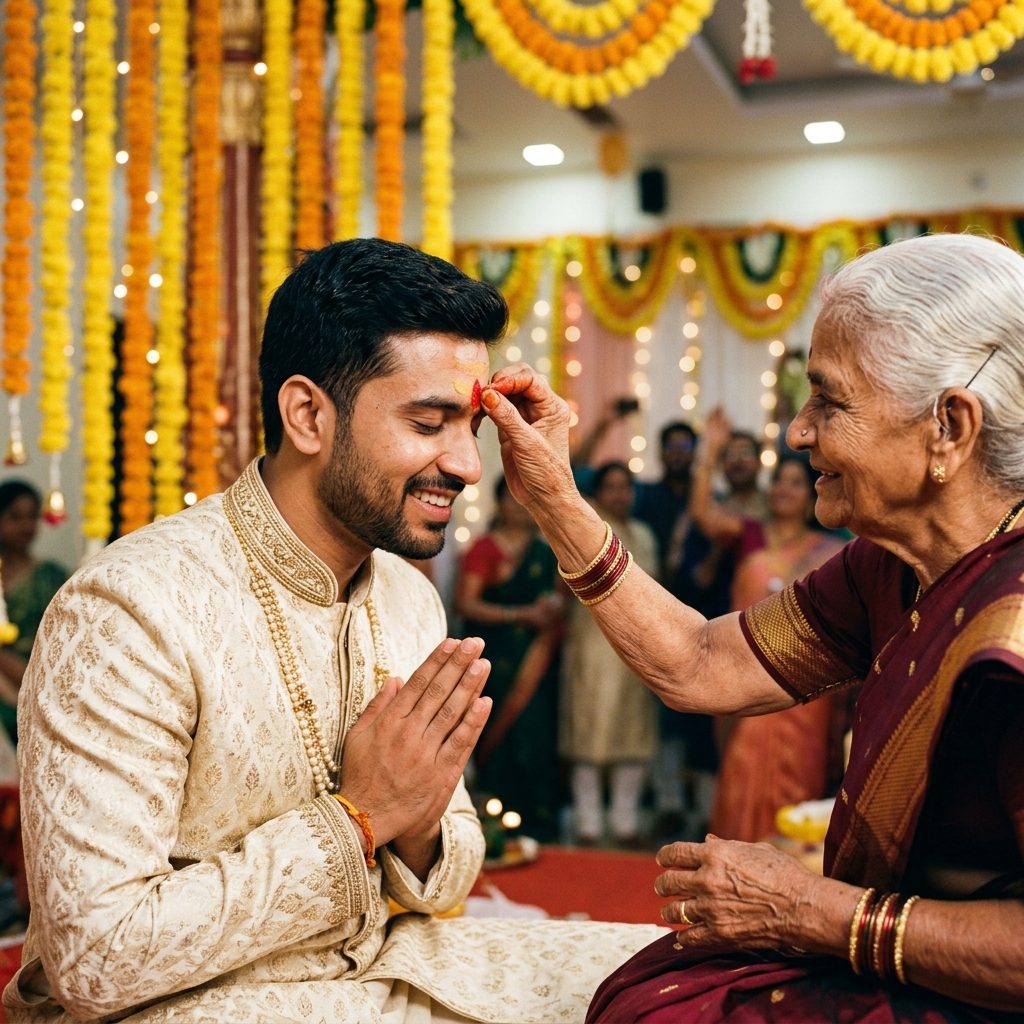
Understanding the Sacred Mark of Acceptance
The Tilak ceremony stands as one of the most significant pre-wedding rituals in Hindu marriages, marking the formal acceptance of the groom by the bride's family. Across various Indian regions, this ceremony is known by different names, such as the Tilak in Bihar and Uttar Pradesh, the Sagan in Punjab, or the Ashirwad in Bengal. Despite regional variations, the core essence remains the same—a formal declaration of the upcoming union. The bride's father or brother applies a tilak, which is a paste of vermilion, sandalwood, and saffron, onto the groom's forehead. This auspicious mark symbolizes honor, prosperity, and the formal initiation of the groom into the wedding festivities. For the groom, it is a moment of profound transition, signifying that he is now trusted with the responsibility of a new family.
The Deeper Spiritual Significance of the Rituals
Every element used during the Tilak ceremony carries a deep spiritual meaning aimed at blessing the groom for his upcoming journey. Understanding these symbols helps the groom appreciate the gravity of the ritual:
- The Tilak and Akshat: The paste applied to the forehead represents the third eye or the seat of the subconscious mind, invoking clarity and wisdom. The unbroken rice grains, known as akshat, stuck to the forehead symbolize abundance, longevity, and a life free from obstacles.
- The Coconut (Shriphal): Often handed to the groom along with a sacred thread, the coconut represents the universe and the divine energy of Shiva and Shakti, signifying a wholesome and fruitful life ahead.
- The Shagun: Sweets, dry fruits, and gifts offered during this time are gestures of love and respect, welcoming the groom warmly into the bride's family fold.
The Tilak is not merely a social gathering; it is the official sealing of a sacred commitment, where a family opens its heart to welcome their future son-in-law with divine blessings.
Essential Etiquette and Tips for the Groom
Preparing for the Tilak ceremony involves both mental readiness and practical coordination. As the central figure of this day, here are a few tips to ensure the ritual goes smoothly. First, choose your attire thoughtfully. Standard choices include an elegant kurta-pyjama or a bandhgala jacket, preferably in auspicious colors like yellow, cream, or soft orange. Avoid overly heavy sherwanis, as this event is typically more intimate and requires you to sit comfortably on the floor for extended periods. Second, respect the elders during the ritual. When the bride's father or brother applies the tilak, bow your head slightly as a mark of respect and accept the gifts with both hands. Lastly, coordinate the timing with the family priest. The ceremony is traditionally performed during a specific auspicious muhurat to align the planetary energies for your prosperity.
If you are planning this beautiful ceremony and want to invite your close family and friends to bear witness, you can design elegant, traditional invitations using the Invite Studio on Shubh Muhrat, ensuring your guests receive a warm welcome right from the start.