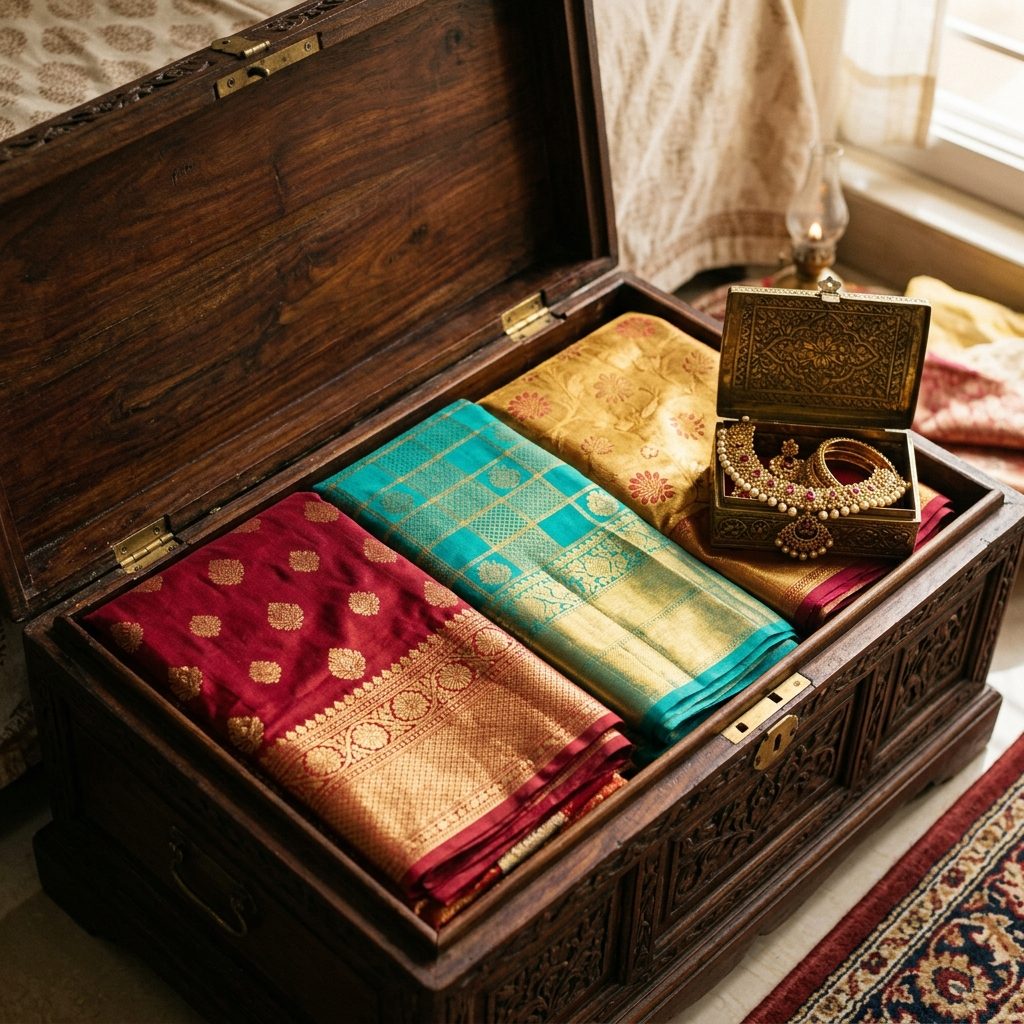
The Indian bridal trousseau, traditionally known as the Peti, Patla, or Pettibadi, is far more than a collection of new clothes. It is a cherished tradition representing a bride’s transition into her new home, packed with blessings, heritage, and personal style. Historically, a trousseau was meant to sustain a bride's wardrobe for the first year of marriage. Today, the modern Indian bride is redefining this custom, moving away from overwhelming trunks of heavy, unwearable garments toward a highly curated, functional capsule wardrobe that balances heritage with everyday utility.
The Heritage Handlooms and Regional Silks
The anchor of any Indian trousseau is its collection of heirloom handlooms. These are the timeless pieces that carry the stories of Indian craftsmanship and are often passed down through generations. A classic Banarasi silk saree in rich vermillion or royal blue, a traditional Kanjeevaram with heavy gold zari borders, or an intricate Gujarati Patola are essentials that never go out of style. When selecting these heavy pieces, prioritize authenticity over fast-fashion trends. Opt for three to five high-quality, handwoven sarees or lehengas. To preserve these precious fabrics, store them wrapped in unbleached muslin or cotton cloth rather than plastic covers, allowing the natural fibers to breathe.
The Modern Fusion and Post-Wedding Wardrobe
Beyond the grand wedding functions, your post-wedding life will involve intimate family dinners, pujas, and casual social gatherings. For these occasions, comfort is key. Your trousseau should feature lightweight, versatile outfits. Consider including the following essentials:
- Lightweight Sarees: Georgette, organza, or chiffons with minimal embellishments that are easy to drape.
- Fusion Sets: Chic co-ord sets and pre-stitched sarees that offer modern comfort.
- Anarkalis and Tunics: Breathable silk-chanderi kurtas that transition easily from day to night.
Focus on a color palette that extends beyond standard bridal red—pastel pinks, mint greens, and warm corals are highly versatile. A great tip is to include modular pieces: a heavy Banarasi dupatta that can be paired with a simple raw silk kurta, or a neutral silk blouse that works with multiple sarees.
"A perfect trousseau is not defined by its volume, but by its versatility. It should honor your roots while seamlessly fitting into your new daily life."
Essential Accessories and the Utility Kit
A common mistake is focusing entirely on apparel and forgetting the accessories that complete the look. Ensure you have a balanced mix of traditional gold jewelry, versatile silver pieces, and high-quality costume jewelry. Footwear requires careful thought; alongside your bridal heels, pack comfortable embellished juttis and block heels that allow you to stand for long hours during post-wedding rituals. Finally, assemble a dedicated utility kit containing safety pins of all sizes, double-sided dress tape, fabric glue, a mini sewing kit, stain remover wipes, and extra bindi packets. This small kit will save you from unexpected wardrobe malfunctions during your first few weeks in a new home.
Every step of the wedding journey requires thoughtful curation, from your wardrobe to how you present yourself to potential partners. If you are starting your matchmaking journey, you can create a beautiful, professional profile using the Shubh Muhrat Biodata Maker to share your background, values, and expectations with prospective families in a polished format.