
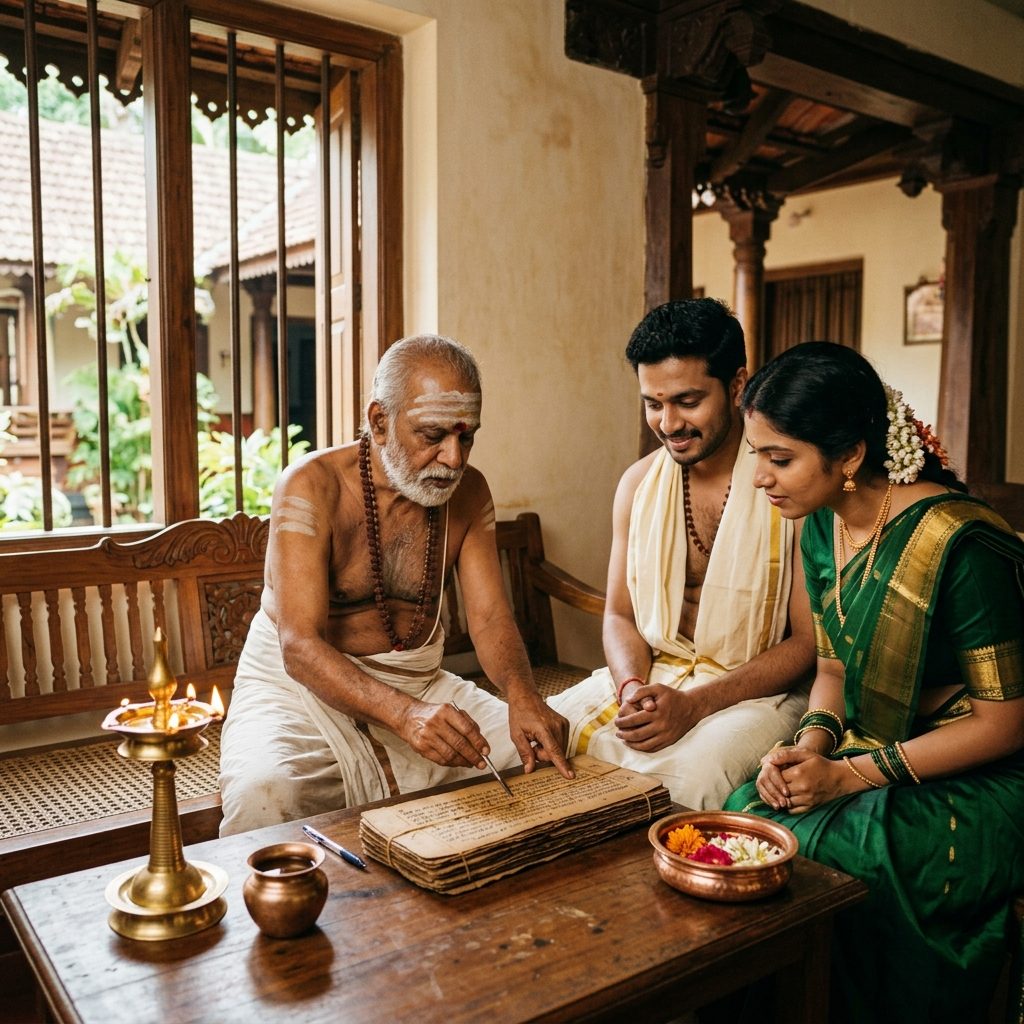
While much of national wedding discourse centers around the 36-gun matching system of North India, South Indian matrimonial traditions rely on a deeply nuanced, comprehensive framework known as the Porutham system. Encompassing ten core compatibilities or Dashakoota equivalents, this ancient methodology evaluates everything from emotional synchronization to biological health and longevity. Among these ten checkpoints, Yoni Porutham and Rajju Porutham hold positions of profound significance, often serving as the decisive factors in ancestral match approval.
The Essence of Yoni Porutham: Physical and Emotional Compatibility
Yoni Porutham examines the intimate harmony, physical attraction, and fundamental temperamental compatibility between the prospective bride and groom. Ancient Vedic astrologers assigned each Nakshatra (birth star) an animal symbol, representing specific instinctual behaviors, energy levels, and social inclinations. The interaction between these animal signs determines the Yoni score, ranging from total harmony to natural enmity.
For instance, pairings are analyzed based on whether the animal symbols share friendly traits, neutral ground, or hostile rivalry. Beyond a mere score, experienced practitioners look at how opposing energies balance each other out in day-to-day domestic life. This evaluation ensures that mutual respect, patience, and physical intimacy are naturally woven into the foundation of the relationship.
Understanding Rajju Porutham: The Pillar of Marital Longevity
If Yoni Porutham governs day-to-day harmony, Rajju Porutham is traditionally viewed as the ultimate guardian of marital longevity and the well-being of the partners. Rajju relates to five specific parts of the human body—Sir (head), Kantha (neck), Uru (thigh), Nabhi (navel), and Pada (feet)—derived from the couple's respective Nakshatras.
According to classical texts, if both the bride and groom fall under the exact same Rajju category, it creates a serious restriction known as Rajju Vedha or dosha, as it is believed to threaten the longevity or health of one partner. Different body parts signify different outcomes; for instance, matching in the head region is considered the most critical stricture. However, contemporary astrologers also factor in pada dosha exceptions and pada-vedha padas, ensuring that families do not hastily dismiss an otherwise stellar match without deeper astrological consultation.
Ancient astrological wisdom does not seek to restrict love, but rather to anticipate natural friction points so families can build enduring, resilient unions.
Evaluating the Complete Porutham Spectrum
While Yoni and Rajju command immense attention, a complete South Indian compatibility check harmonizes all ten traditional Poruthams to paint a holistic picture of the alliance:
- Dina Porutham: Assesses general health, prosperity, and daily well-being.
- Gana Porutham: Evaluates temperament and spiritual disposition (Deva, Manushya, or Rakshasa).
- Stree Deergha: Measures long-term prosperity and financial stability in the household.
- Rasi and Rasyadhipathi: Examines emotional bonding and mental synchronization based on moon signs.
Navigating the intricate layers of horoscope matching requires both respect for tradition and clarity of interpretation. Whether you are validating a promising alliance or exploring regional customs for the first time, having instant access to accurate calculations is invaluable. Use Shubh Muhrat's Kundli Matching tool to check your compatibility instantly and honor your traditions with confidence.