
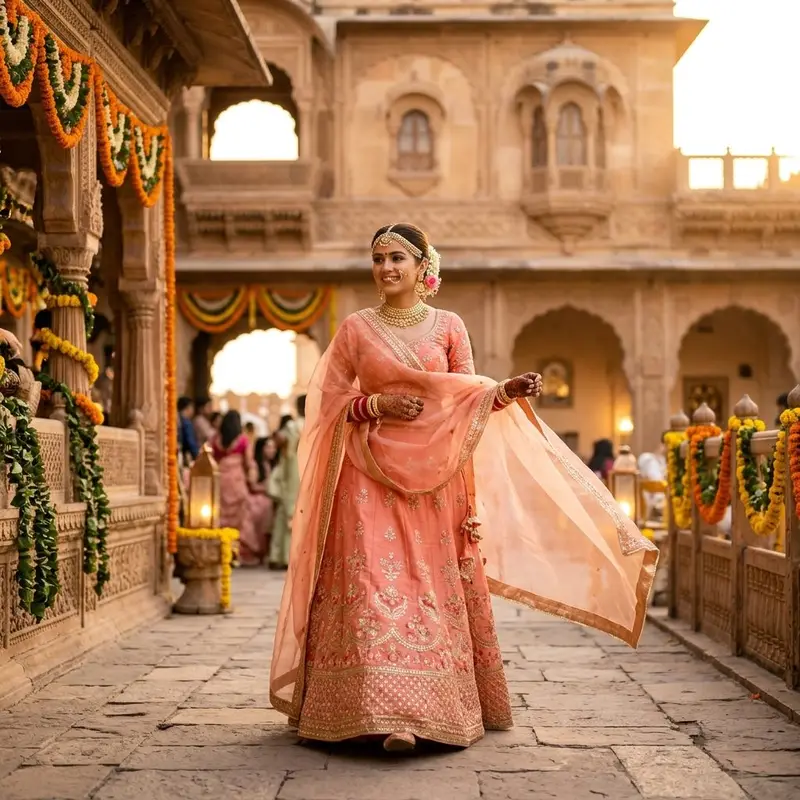
Packing for a destination wedding introduces distinct atmospheric variables that a standard banquet hall never presents. From coastal sea breezes and high humidity in Goa to dew-soaked winter lawns in Jaipur, each venue interacts directly with bridal textiles. Selecting a destination wedding bridal outfit is not merely an aesthetic choice; it requires understanding ceremonial mechanics, climate transitions, and venue architecture.
The Daytime Haldi and Tel Baan: Navigating Turmeric and Dewy Turf
The Haldi and ceremonial Tel Baan are inherently messy, intimate, and joyfully chaotic. When held on an open palace lawn or beachfront deck, morning moisture can quickly dampen fabric hems. Heavy silk weaves absorb oils and water immediately, weighing down the bride and leaving permanent stains that ruin heirloom pieces.
- Fabric choice: Opt for lightweight Chanderi, modal satin, or crushed tissue in warm marigold, sunflower, or ochre hues. These fabrics dry quickly and drape softly without trapping heat.
- Silhouette strategy: Choose an ankle-skimming lehenga or a pre-stitched dhoti-kurta set. Keeping the hem two inches above the grass prevents dewy turf and runaway ubtan paste from soaking into your borders during seating rituals on the wooden patla.
The Sundowner Mehendi: Posture, Breezes, and Hand Freedom
Bridal henna application requires sitting stationary for four to six hours, often as the afternoon sun gives way to a brisk evening breeze at outdoor terraces. Outfits with stiff shoulder seams or heavy dupatta attachments cause intense cervical strain during long application sessions.
Embrace a tiered sharara suit or an airy kalidar kurta paired with wide-leg palazzo pants. Ensure your sleeves are tailored either sleeveless or three-quarter length with relaxed cuffs, allowing the mehendi artist unobstructed access past your elbows without constant fabric pinning. Keep the dupatta detachable or pre-draped across the torso so your arms stay entirely unencumbered.
A destination bridal ensemble should honor every sacred step of the ritual without requiring the bride to battle her own attire across changing terrain.
The High-Energy Sangeet: Choreography and Stage Logistics
The destination Sangeet demands uninhibited physical movement across elevated stages, wooden dance decks, or stone amphitheaters. A skirt weighed down by five layers of stiff buckram and heavy metal can-can makes fast footwork during family performances precarious.
Choose lightweight georgette, organza, or fine crepe embellished with mirror-work, sequins, or cut-dana embroidery rather than solid metal zardozi. Request your designer to incorporate a detachable can-can skirt. This architectural detail gives you the dramatic theatrical flare for entrance portraits while allowing you to detach the inner netting before taking the dance floor for fast-paced choreographies.
The Lagna and Sacred Pheras: Managing Havankund Radiance
The sacred mandap ceremony is the spiritual core of the wedding, but it presents a unique physiological challenge at destination venues. Sitting within close proximity to a blazing havankund for the Saat Phere and Kanyadaan raises local ambient temperature significantly, particularly in humid or semi-arid climates.
Traditional heavy micro-velvet lehengas can cause intense overheating during the rituals. Instead, celebrate classical grandeur through woven Banarasi katan silk, tissue organza, or lightweight raw silk adorned with hand-embroidered resham and artisanal gota patti. These traditional techniques offer breathtaking visual depth with only a fraction of the physical heft.
Implement a two-dupatta system: anchor a structured, richly bordered silk dupatta across your shoulder, while using an ethereal, feather-light tissue or net dupatta as your sir-dhaka head veil. This prevents neck strain while performing pranam and circumambulating the sacred fire.
Curating a destination wardrobe that balances ritual sanctity with climatic comfort requires experienced artisans. Explore Shubh Bazaar to connect with verified bridal wear designers, bespoke karigars, and destination wedding stylists who specialize in crafting lightweight couture tailored for outdoor Indian celebrations.