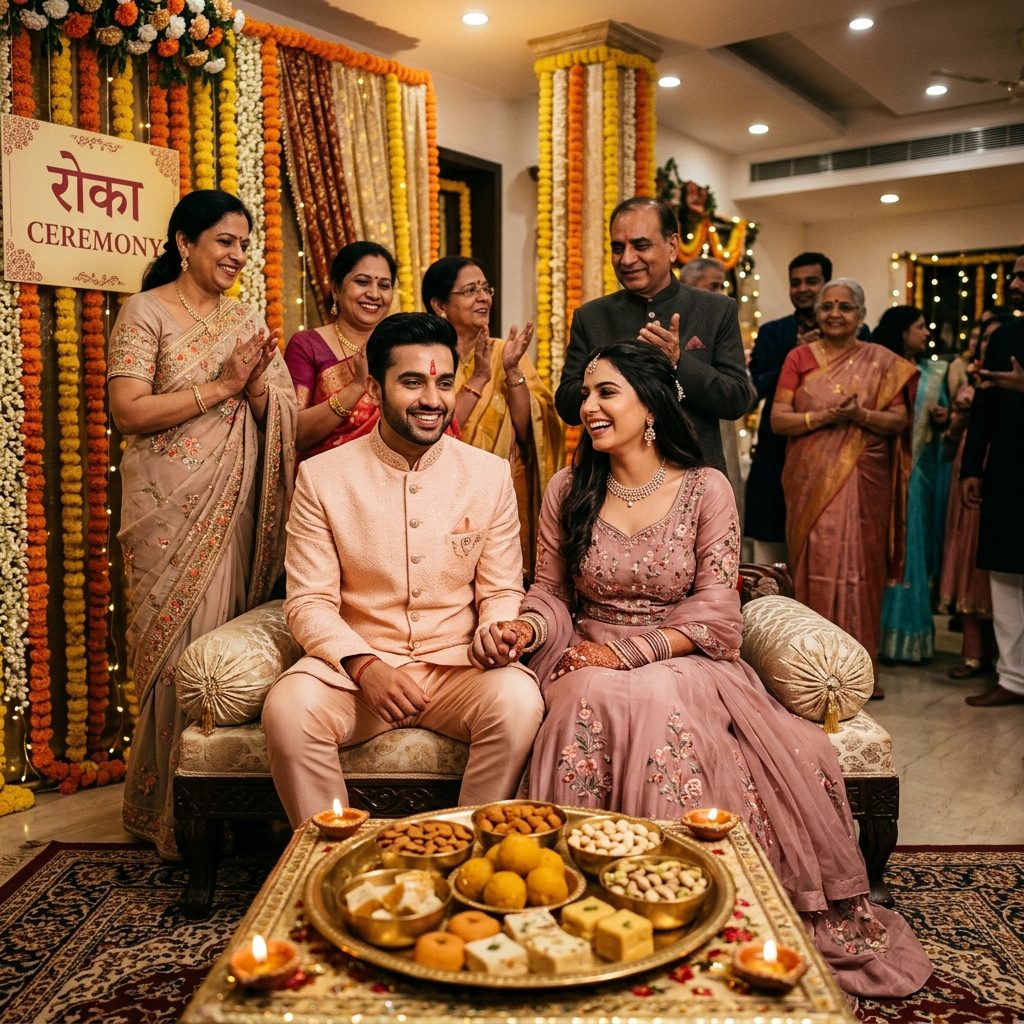
The Roka ceremony is one of the most significant pre-wedding rituals in Indian culture, marking the official announcement of a couple’s intent to marry. Derived from the Hindi word 'Rokna,' which literally translates to 'to stop' or 'to secure,' the Roka signifies that the search for a life partner has officially concluded. It is a beautiful declaration of commitment made in the presence of close family members, laying the foundation for all the grand wedding celebrations that are to follow in the coming months.
The Cultural Significance and Traditional Rituals
Traditionally, the Roka is a simple and heartfelt affair held at the bride's home or a community venue. The ceremony begins with a brief puja or prayer to seek the blessings of the Almighty for the couple’s future together. The groom's family blesses the bride by gifting her traditional sweets, dry fruits, jewelry, and a gorgeous dupatta, symbolizing her acceptance into their lineage. In turn, the bride's family applies a red vermillion tilak on the groom's forehead and presents him with shagun, clothes, and gifts. This mutual exchange of love and respect cements the bond between the two households, marking the moment they officially become extended family.
The Roka is not merely the booking of a bride and groom; it is the official handclasps of two families promising to merge their histories, values, and futures into one shared narrative.
Modern Roka Etiquette for Couples and Families
As Indian weddings evolve, the Roka has also undergone a modern transformation. Traditionally a small living room gathering, it is now often celebrated in boutique banquet halls, cafes, or intimate outdoor venues. If you are planning your Roka, keeping these contemporary etiquette guidelines in mind will ensure a smooth celebration for both sides:
- Keep the Guest List Intimate: Unlike the main wedding, the Roka is historically limited to immediate family members, close uncles, aunts, and first cousins. It is best to keep the gathering under fifty guests to maintain its cozy, personal charm and allow the two families to truly interact.
- Clarify the Budget and Hosting: Modern etiquette dictates that the hosting responsibilities can be shared. While traditionally the bride's family hosts, many modern couples choose to co-fund the event or split the expenses between both sides to ease the financial pressure.
- Streamline the Gifting: To avoid awkwardness, discuss gift expectations beforehand. Many contemporary couples prefer a 'no box gifts' or 'no cash gifts' policy, opting instead for thoughtful, eco-friendly hampers or a simple exchange of sweets.
- Respect Regional Differences: Every community in India has its own way of conducting the Roka. Respecting each other's custom practices, whether it is Punjabi, Marwari, or Gujarati, ensures a harmonious start to the relationship.
Planning the Perfect Announcement
With families often residing in different cities or even countries, coordination is key to pulling off a flawless modern Roka. Setting the right tone starts with the very first announcement check. Once the auspicious date is finalized by matching the horoscopes, communicating the venue, dress code, and timing to your intimate guest list should be done with warmth and clarity. Using digital tools can greatly simplify this process and show your guests that you value their presence.
To help you send elegant digital announcements and organize your guest list effortlessly, you can design stunning invitations using the Shubh Muhrat Invite Studio. This tool helps you create personalized digital cards that carry the warmth of your traditional values into the digital space, ensuring your close ones feel truly welcomed to your special day.