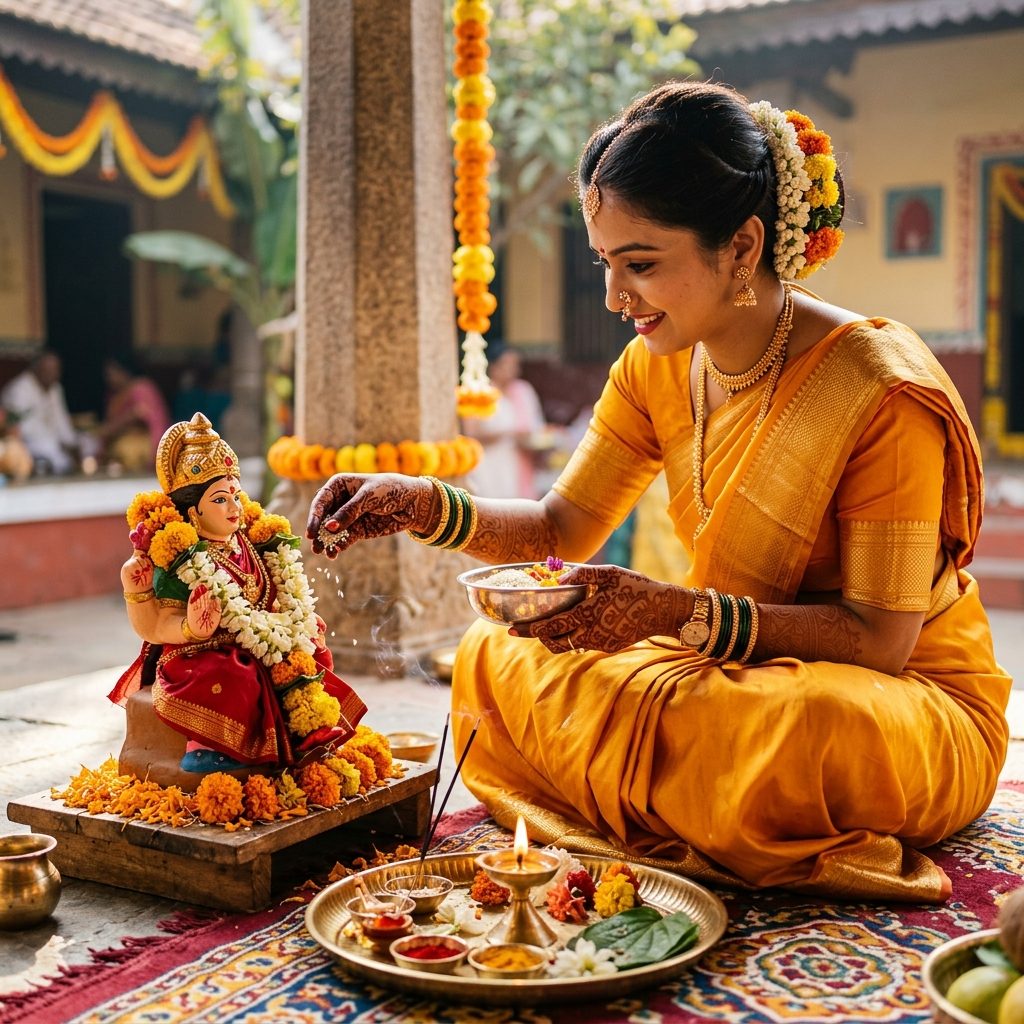
In the vibrant tapestry of Indian weddings, the days leading up to the main ceremony are filled with intimate, deeply symbolic rituals. Among these, Gauri Puja stands out as one of the most sacred and emotionally resonant pre-wedding rituals for a bride. Rooted in ancient Vedic traditions, this ceremony is dedicated to Goddess Gauri, an incarnation of Goddess Parvati, who embodies marital bliss, strength, devotion, and fertility. By performing this puja, the bride seeks the blessings of the divine mother for a peaceful and prosperous married life.
The Spiritual Essence and Mythological Roots
Gauri Puja is traditionally performed by the bride on the morning of the wedding day or the day prior. Goddess Parvati is revered as the ultimate consort, having won Lord Shiva through intense devotion. Therefore, she represents the ideal wife in Hindu mythology. During the ritual, the bride prays for a partner as devoted as Shiva and asks for the strength to nurture her new household. It is a quiet, contemplative moment for the bride amidst the hustle and bustle of wedding preparations, allowing her to connect with her inner self and seek divine guidance for her upcoming journey.
"Just as Goddess Gauri stood as the pillar of strength beside Lord Shiva, this puja empowers the modern bride with grace, patience, and resilience as she steps into a new chapter of life."
Regional Variations Across India
While the core essence remains the same, the customs surrounding Gauri Puja vary beautifully across different Indian states. In Maharashtra, the ritual is known as Gowri Hara Puja. The bride, dressed in her traditional yellow or green Shalu silk saree, worships an idol of Goddess Parvati made of rice grains or clay. In Karnataka and Andhra Pradesh, it is often celebrated as Mangala Gowri Puja, where married women of the household join the bride to sing devotional songs. In Tamil weddings, the bride performs Gauri Kalyan Puja, invoking blessings for her husband's longevity and health.
Step-by-Step Ritual Highlights
The ceremony is typically conducted in the ancestral home or the wedding venue itself, under the guidance of family elders or a priest. Here are the key steps involved in a traditional Gauri Puja:
- Setting the Altar: A small wooden platform is decorated with rangoli, and an idol of Goddess Gauri is placed on a bed of rice or wheat.
- Invoking the Deity: The bride bathes the idol symbolically with milk, honey, and water, followed by the application of haldi and kumkum.
- The Sacred Thread: A yellow thread, sanctified by mantras, is tied around the bride's wrist as a protective amulet.
- Offerings of Love: The bride offers fresh flowers, seasonal fruits, and traditional sweets like modak or laddoos to the deity.
- Traditional Aarti: The ritual concludes with the bride performing an aarti, seeking forgiveness for any shortcomings and asking for a blessed marital path.
Embracing Traditions in the Modern Era
As young couples prepare to embark on their conjugal journey, balancing ancient customs with modern conveniences becomes essential. While rituals like Gauri Puja enrich the soul, organizing a wedding requires meticulous planning. Aligning your astrological compatibility is the first step toward a harmonious union. To ensure your stars are aligned just like Shiva and Parvati, you can use the Kundli Match tool by Shubh Muhrat to generate comprehensive compatibility reports and find the most auspicious muhurat for your sacred rituals.