The Sacred Prelude: Bhaat Nyootana and Mayera
A Marwari wedding is a grand tapestry of devotion, respect, and deep family ties. The celebrations begin weeks in advance with the Bhaat Nyootana, a formal ceremony where the mother of the bride or groom visits her maternal home to invite her brothers. This is followed by the emotional Mayera or Bhaat ceremony. The maternal uncle (Mama) and his family arrive with gifts, clothes, cash, and jewelry for the entire household. This beautiful tradition highlights the enduring bond between a sister and her maternal family, ensuring they play a central role in the wedding celebrations. The uncle's arrival is met with grand hospitality, establishing the tone of generosity and joy for the upcoming festivities.
Welcoming the Groom: Toran and Baraat
On the wedding day, the groom arrives with the Baraat, but entry to the venue is only granted after the dramatic Toran ritual. The groom, traditionally riding a decorated horse, must strike a decorative wooden arch hung at the entrance with a sword or a neem stick. This ritual symbolizes overcoming obstacles to claim his bride. Once inside, the bride's mother performs the Aarti and playfully pulls the groom's nose—a custom known as Imli Ghoontana—to ward off the evil eye and welcome him warmly into the family. This lighthearted moment balances the solemnity of the upcoming rites.
"The Marwari wedding is not just a union of two individuals, but a beautiful alignment of two families, deeply rooted in ancestral respect and community bonding."
The Mandap Rituals: Panigrahan and Phere
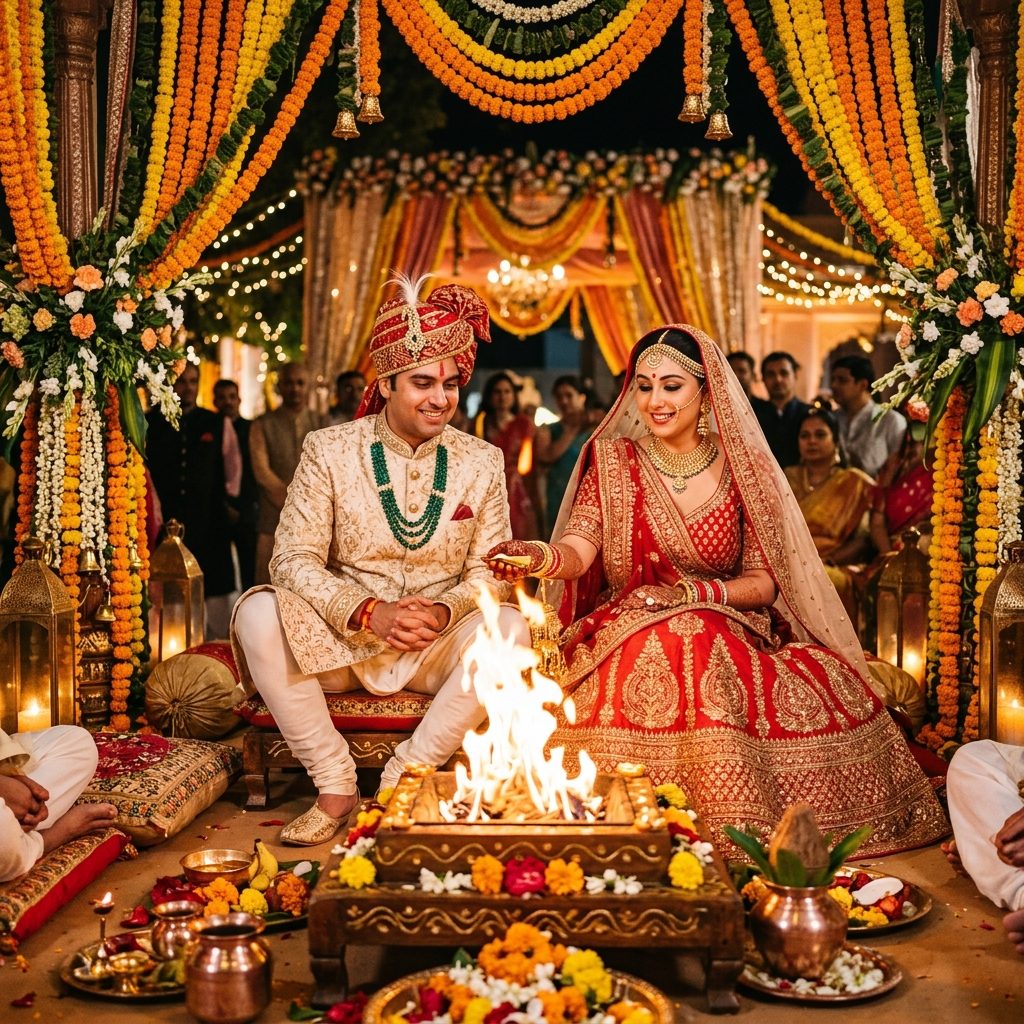
Under the beautifully decorated mandap, the core Vedic rituals take place. The most significant among these are the Panigrahan (hand-taking ceremony) and the Phere. Unlike many other Indian communities where seven rounds are taken, traditional Marwari weddings often feature four pheras around the sacred fire, representing the four pillars of Hindu life: Dharma (duty), Artha (wealth), Kama (desire), and Moksha (liberation). The bride leads the groom for the first three pheras, signifying her guidance in emotional and spiritual matters, while the groom leads the final one. The couple then exchanges vows, sealing their eternal commitment to one another in front of the priest and elders. This is followed by the Kanyadaan, where the father of the bride entrusts his daughter's hand to the groom.
Essential Elements of a Marwari Wedding
- Pithhi (Haldi): A purification ceremony using turmeric paste, accompanied by traditional folk songs sung by family women to enhance the bride and groom's glow.
- Palla Dastoor: The groom's family brings bridal clothes, heavy jewelry, and cosmetics to the bride's home, symbolizing their commitment to her upkeep and happiness.
- Griha Pravesh: The bride's grand welcome into her new home, marked by knocking over a pot of rice and leaving red footprints with vermillion water.
- Pag Phera: The bride's return to her parental home for a brief visit shortly after the wedding, signifying that she remains a cherished daughter of her family.
Every Marwari ritual reflects a deep sense of heritage, respect for elders, and familial bonding. Planning these intricate steps requires careful coordination, starting with inviting your loved ones in a way that respects these rich customs. You can craft elegant, culturally resonant digital invitations using the Invite Studio on Shubh Muhrat, ensuring your guests are welcomed with the traditional warmth and grandeur your heritage demands.