
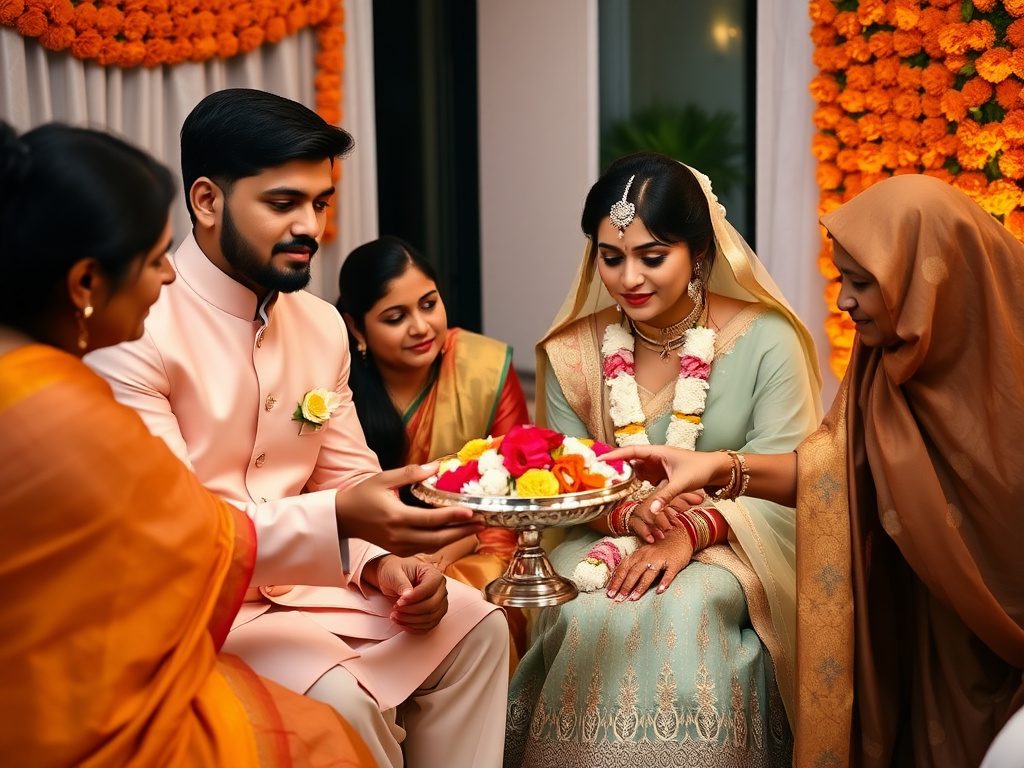
The Roka ceremony marks the official beginning of an Indian wedding journey. Derived from the word 'rokna' (which translates to 'to stop' or 'to secure'), the Roka signifies that the search for a life partner has officially concluded. It is a beautiful, formal announcement where both families express their consent, secure the alliance, and bless the couple. While historically a simple, intimate home affair, the modern Roka has evolved into a stylish event that balances traditional values with contemporary celebrations.
The Spiritual and Cultural Significance of the Ritual
Traditionally, the Roka is the first official meeting of the extended families. The ritual begins with a brief puja or prayer to Lord Ganesha to seek blessings for a hurdle-free wedding journey. The groom's family presents the bride with a 'shagun'—a traditional gift basket filled with dry fruits, sweets, clothes, and sometimes jewelry. In return, the bride's family performs a tilak ceremony for the groom, applying vermilion and rice grains to his forehead. This exchange symbolizes mutual respect, acceptance, and the merging of two distinct family trees.
The Roka is not just the union of two individuals, but the respectful handshake between two families, promising to walk the path of wedding planning together.
Modern Roka Etiquette: Guests, Hosting, and Budgets
As Indian weddings adapt to modern times, the etiquette surrounding the Roka has also shifted. Today, couples often face dilemmas regarding the scale, budget, and guest list of this ceremony. Here are a few contemporary guidelines to navigate the event smoothly:
- Keep the Guest List Intimate: Traditionally, only immediate family members, grandparents, and maternal/paternal uncles and aunts attend. Keep it under 50 guests to maintain the warmth of the occasion.
- Clarify Hosting and Expenses: Historically, the bride's family hosted the Roka. Today, it is increasingly common for both families to co-host the event at a neutral venue, sharing the expenses equally.
- Gift Etiquette: While cash (shagun) and sweets are traditional, modern etiquette encourages registry-based gifting or politely requesting 'no gifts' to avoid clutter.
- Dress Code: Opt for elegant, semi-formal Indian wear. Pastel lehengas or lightweight sarees for brides, and bandhgalas or kurta-pyjamas with jackets for grooms work beautifully.
Preparing Your Roka Shagun Thali
To ensure your ceremony proceeds without any last-minute hurdles, it is essential to prepare the ceremonial platter in advance. A traditional Roka thali should ideally contain the following sacred items:
- Roli (vermilion) and chawal (rice grains) for the tilak.
- Fresh flower petals, preferably marigold or rose.
- A decorative coconut (shriphal) wrapped in a red thread (mouli).
- A selection of traditional Indian sweets or artisanal mithai.
- Silver or gold coins, representing prosperity and good fortune.
Announcing Your Union with Elegance
In the digital age, sharing the joy of your Roka with friends and extended family has become much simpler. Once the dates are locked after consulting the panditji, sending out a formal announcement is the next step. You can design stunning, culturally rich digital invitations using the Shubh Muhrat Invite Studio, allowing you to share your happy news with loved ones instantly. By combining these traditional steps with modern hosting etiquette, you set a beautiful, stress-free tone for the rest of your wedding festivities.